
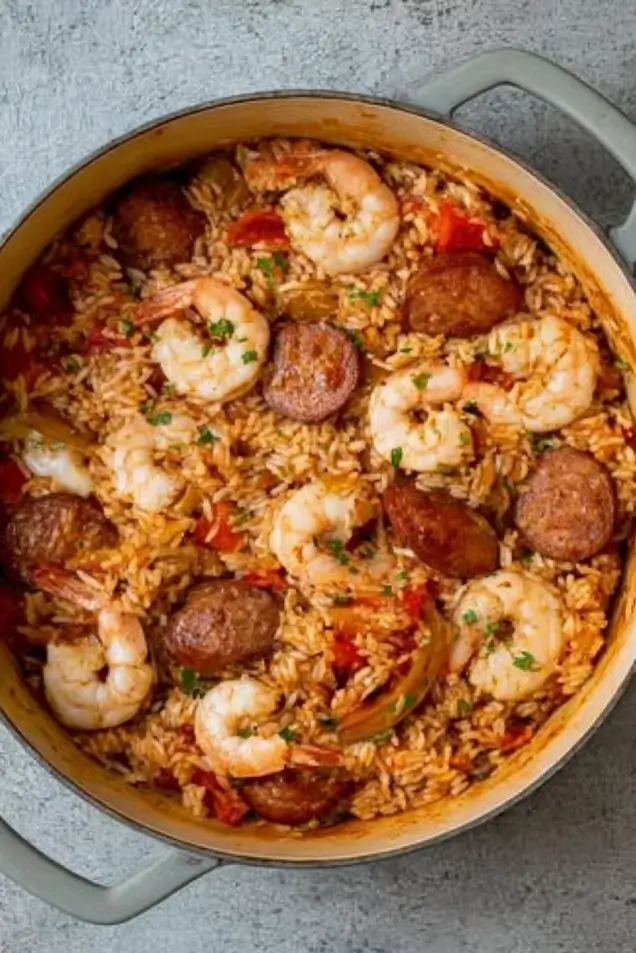
If you’re anything like me, your kitchen is a revolving door of “what’s for dinner?” panic and the occasional culinary triumph that makes you feel like a Michelin-starred chef. Well, pull up a chair and let me tell you about the day my Dutch oven became a time machine to New Orleans.
Jambalaya is one of those dishes that sounds intimidating. It’s got a big name, a big personality, and a history as rich as its sauce. For the longest time, I thought you needed a secret family heirloom recipe or a direct line to a grandmother in the Bayou to get it right. But here’s a secret between us: it’s actually the ultimate one-pot wonder for people who love big flavor but hate doing a mountain of dishes.
The Magic of the “Holy Trinity”
In the world of Cajun and Creole cooking, there’s this thing called the “Holy Trinity.” No, we’re not talking theology—we’re talking about the aromatic foundation of onion, celery, and bell pepper.
The first time I made this, I was skeptical. I thought, “Surely I need more spices?” But there’s a specific kind of alchemy that happens when you sauté these three together in the rendered fat of Andouille sausage and chicken. It creates this sweet, earthy, savory base that literally nothing else can replicate. When that smell starts wafting through your house, I promise your neighbors will suddenly find a reason to “borrow a cup of sugar.”
Why Bone-In Chicken is a Total Game Changer
I know, I know. It’s tempting to just grab a pack of boneless, skinless breasts because they’re “easy.” Don’t do it! Trust me on this. We’re using bone-in, skin-on thighs for a reason.
First off, the skin gets all crispy and golden in the pot, leaving behind these glorious little brown bits (the fond) that are basically concentrated flavor gold. Second, cooking the chicken on the bone keeps the meat incredibly juicy while it simmers. Once you pull that tender meat off the bone at the end and fold it back into the rice? It’s a texture explosion that boneless chicken just can’t touch.
The Secret Ingredient You’re Probably Doubting
Okay, let’s talk about the elephant in the room: Clam juice.
I saw your face! I had the same reaction the first time I saw it in a recipe. “Clam juice in my rice?” But hear me out. It doesn’t make the dish taste “fishy.” Instead, it adds this deep, briny, umami backbone that makes the whole pot taste like it’s been simmering on a stove in the French Quarter for twelve hours. It bridges the gap between the smoky sausage and the sweet shrimp perfectly. If you skip it, you’re missing the soul of the dish.
Let’s Talk Rice: The “No-Mush” Policy
If there is one hill I am willing to die on, it is the hill of converted rice.
Have you ever had jambalaya that felt more like a risotto or, worse, a savory rice pudding? Yeah, it’s heartbreaking. Using Ben’s Original (the parboiled stuff) is the ultimate “cheat code” for perfect jambalaya. Because it’s been steamed in the husk before processing, the grains stay separate and fluffy even after soaking up all that broth and tomato juice.
I’ve tried this with Jasmine rice, and while I love Jasmine for a stir-fry, it just turned into a sad, sticky mess in the oven. Stick to the converted rice; it’s the insurance policy your dinner deserves.
The Oven Method vs. The Stovetop
Most people try to cook their jambalaya entirely on the stove. And hey, if you want to stand there and stir every five minutes to make sure the bottom isn’t burning while the top stays raw, be my guest!
But the “pro move” here is finishing it in the oven. It provides even, surrounding heat that cooks the rice perfectly without you having to baby it. It’s the “set it and forget it” moment that allows you to pour a glass of wine, clean up your cutting board, or just stare blankly at the wall for twenty minutes (we’ve all been there).
The Shrimp Finale
The shrimp are the “primadonnas” of this recipe. They don’t need much time. If you put them in too early, they’ll turn into rubbery little erasers. We toss them in right at the very end. The residual heat from the rice and the Dutch oven essentially poaches them to perfection in about five to seven minutes. When they turn that beautiful opaque pink, you know it’s go-time.
Tips for the Best Results (A.K.A. Lessons I Learned the Hard Way)
- Don’t over-drain the tomatoes: You want the diced tomatoes, but don’t feel like you need to squeeze them dry. A little bit of that juice adds to the acidity.
- The “Scrape”: When you add the broth and clam juice, use your wooden spoon to really scrape the bottom of the pot. Those brown bits from the sausage and chicken are where the deep, smoky flavor lives.
- Patience is a Virtue: Let the pot sit for five minutes after you stir the chicken back in. It lets the flavors marry and ensures every bite is piping hot.
Prepping Ahead and Leftovers (The Gift That Keeps on Giving)
One of the best things about this Jambalaya is that it actually tastes better the next day. The spices have time to really settle into the rice.
If you’re a meal prepper, this is your holy grail. It reheats beautifully. Just a little tip: if you’re reheating a big portion in the oven, add a splash of chicken broth. The rice is thirsty and will have soaked up everything overnight; that extra splash of liquid brings back the “just-cooked” silkiness.
How to Serve It Up
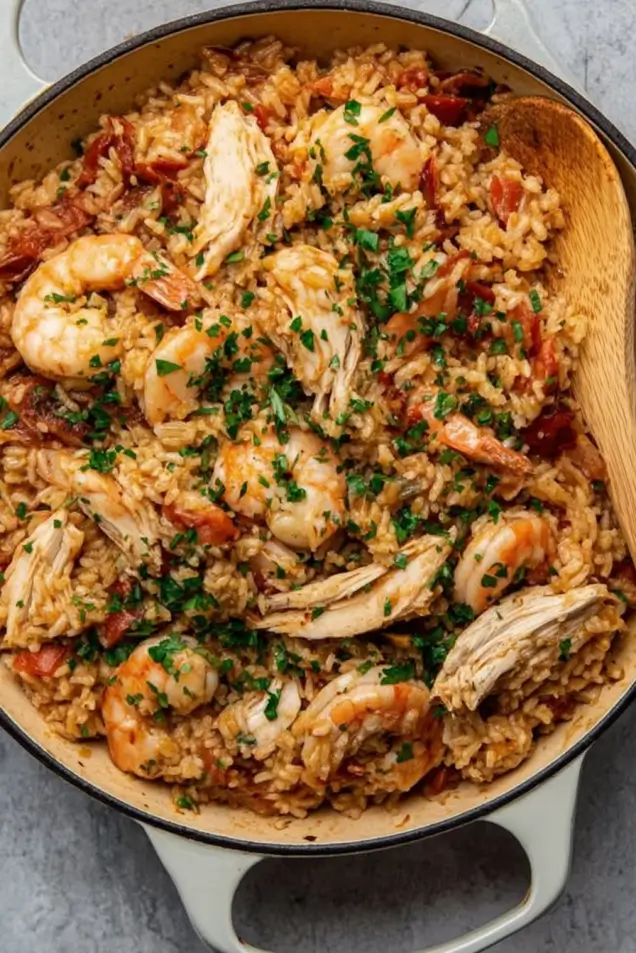
Personally, I think this is a complete meal in a bowl. You’ve got your protein, your veg, and your carbs. But, if you want to go the extra mile, a side of honey-buttered cornbread or a super simple vinegar-based coleslaw provides a nice crunch and sweetness to balance out the heat from the cayenne.
And don’t forget the parsley! It’s not just for looks. That pop of fresh green cuts through the richness of the Andouille and the chicken skin.
Frequently Asked Questions (Because I Know You’re Thinking It)
Can I use a different sausage? You can, but Andouille is traditional for its spice and snap. If you can’t find it, a good smoky Kielbasa will work, just maybe add an extra pinch of cayenne to keep the heat levels up.
What if I don’t have a Dutch oven? Any heavy, oven-proof pot with a tight-fitting lid will do. The “heavy” part is important—thin pots can have hot spots that might scorch your rice.
Is it too spicy for kids? The 1/4 teaspoon of cayenne gives it a “hum,” but it’s not a five-alarm fire. If you’re worried, you can dial the cayenne back to a pinch, but keep the black pepper for that foundational warmth.
Ready to bring a taste of the Bayou to your kitchen?
This recipe isn’t just about feeding people; it’s about that moment when you lift the lid off the Dutch oven and the steam hits your face, smelling like woodsmoke, garlic, and sea air. It’s comfort food that feels like a celebration.
I’d love to hear how yours turns out! Did you brave the clam juice? Did you find the perfect Andouille? Tag me in your photos or drop a comment below. Happy cooking, friends!
One-Pot Oven-Baked Jambalaya Recipe
6
servings30
minutes1
hour785
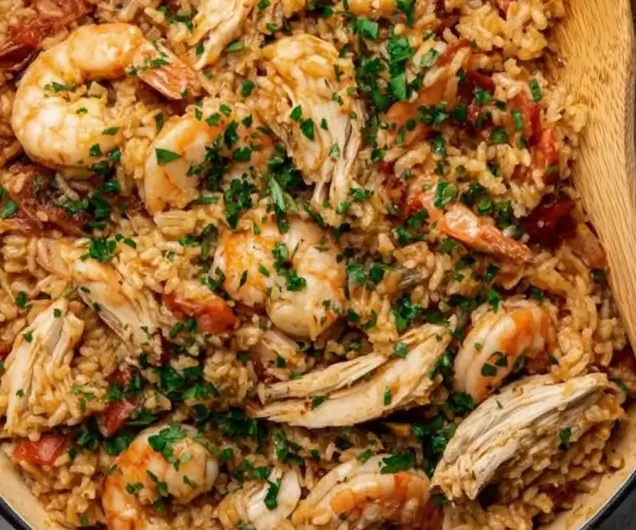
kcalThis classic Jambalaya features tender pulled chicken, smoky Andouille sausage, and succulent shrimp. By finishing the dish in the oven with converted rice, you ensure a perfectly fluffy texture and deep, developed flavors every time.
Ingredients
4 bone-in, skin-on chicken thighs (approx. 1¾ lbs / 794 g)
13 oz Andouille sausage, sliced into ¼-inch (6-mm) rounds
1 lb extra-large shrimp (26–30 count), peeled, deveined, and tails removed
1 tablespoon vegetable oil
1 medium yellow onion, finely chopped
1 rib celery, finely chopped
1 red bell pepper, finely chopped
5 cloves garlic, minced
2 tablespoons tomato paste
1½ cups chicken broth
1 bottle (8 oz) clam juice
1 can (14.5 oz) diced tomatoes, thoroughly drained
¾ teaspoon salt
¼ teaspoon freshly ground black pepper
¾ teaspoon dried thyme
¼ teaspoon cayenne pepper
2 cups converted long-grain white rice (e.g., Ben’s Original)
3 tablespoons fresh parsley, chopped (optional garnish)
Directions
- Sear the Proteins
Position your oven rack to the lower-middle spot and preheat the oven to 350°F (175°C). Season the chicken thighs thoroughly with the salt and black pepper. In a large Dutch oven or heavy oven-safe pot, heat the vegetable oil over medium-high until shimmering. Brown the chicken for about 8 minutes total, flipping once, then set aside in a large bowl. In the remaining fat, cook the sliced sausage for about 5 minutes until lightly browned, then move it to the bowl with the chicken. - Sauté the Aromatics
Add the onion, celery, and bell pepper to the pot. Cook over medium-high heat for about 5 minutes until softened. Stir in the minced garlic for 30 seconds (be careful not to brown it), then mix in the tomato paste and cook for an additional minute. - Simmer the Base
Pour in the chicken broth, clam juice, drained tomatoes, thyme, and cayenne pepper. Use a wooden spoon to scrape the browned bits (the fond) off the bottom of the pot. Return the chicken, sausage, and any collected juices to the pot. Bring the mixture to a simmer, then cover and cook over medium-low heat for 20 minutes. - Bake the Rice
Stir the converted rice into the pot. Cover with the lid and transfer the pot to the oven. Bake for 25 minutes, or until the rice is tender and the liquid is absorbed. Gently stir the rice once halfway through the baking time. - The Final Addition
Remove the pot from the oven and move the chicken thighs to a cutting board. Stir the raw shrimp into the rice mixture, cover, and return to the oven for 5 to 7 minutes until the shrimp are opaque. While the shrimp cook, use two spoons to shred the chicken meat; discard the bones and skin. - Serve
Fold the pulled chicken and optional parsley back into the rice. Taste and adjust seasonings if necessary. Cover and let the dish rest for 5 minutes to ensure the chicken is heated through. Serve warm.
Notes
- Rice Choice: For the best results, use converted (parboiled) rice. It is specifically processed to remain fluffy and individual even after absorbing large amounts of liquid. Avoid instant, jasmine, or basmati rice, as they will result in a mushy texture.
- Make-Ahead/Reheating: Store leftovers in the fridge for up to 2 days. Reheat in a 325°F oven for 30 minutes (covered) with a splash of chicken broth if the rice seems dry.
- Freezing: This dish freezes well for up to 3 months in an airtight container. Thaw in the refrigerator overnight before following the reheating instructions above.