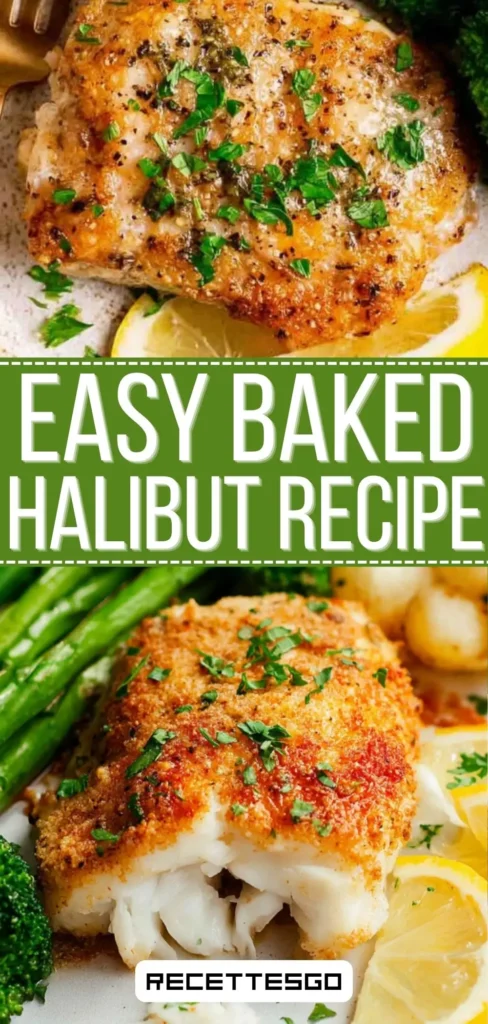

Okay, real talk — halibut used to intimidate me. Like, genuinely. Every time I’d see those thick, gorgeous filets at the fish counter, I’d convince myself they were “weekend project” fish. Too fancy. Too easy to mess up. Too expensive to ruin on a random Tuesday.
Then one evening I was staring into my fridge, half-motivated, with zero desire to do anything elaborate — and I just went for it. Simple seasoning, a parmesan-flour crust, a drizzle of olive oil, and a hot oven. That’s it. Thirteen minutes later I pulled out the most perfectly golden, flaky, absolutely delicious baked halibut I had ever eaten. In my own kitchen. On a Tuesday.
Now it’s in permanent rotation, and honestly? I’m a little annoyed it took me this long.
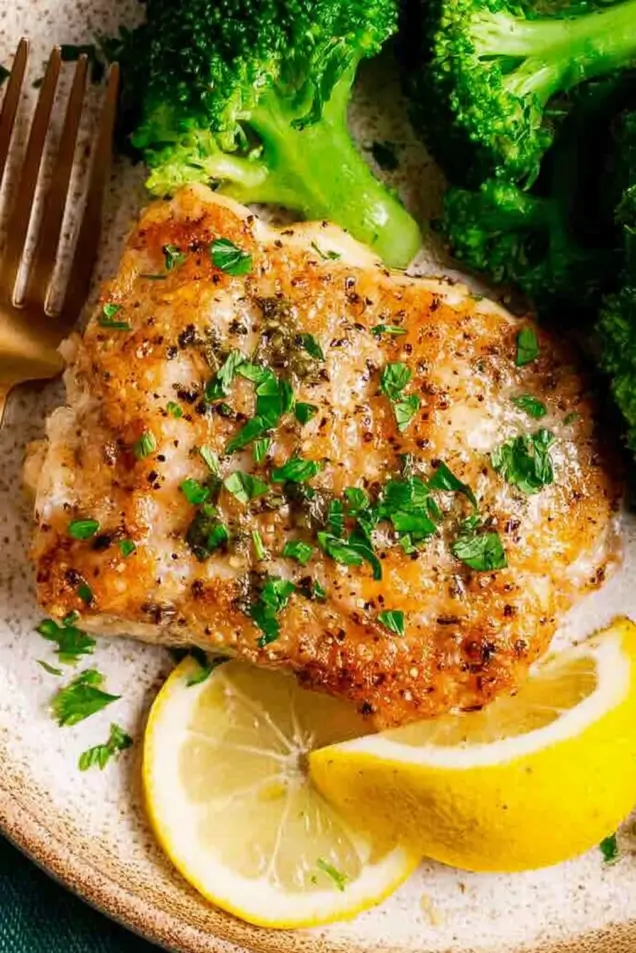
Why Baked Halibut Deserves a Spot in Your Weekly Dinner Lineup
If you’ve been sleeping on baked halibut recipes, allow this to be your wake-up call. Halibut is one of those fish that just works in the oven. It’s firm enough to hold up to a crust, mild enough that even picky eaters don’t freak out, and it cooks so fast you can have dinner on the table before anyone even realizes you made something impressive.
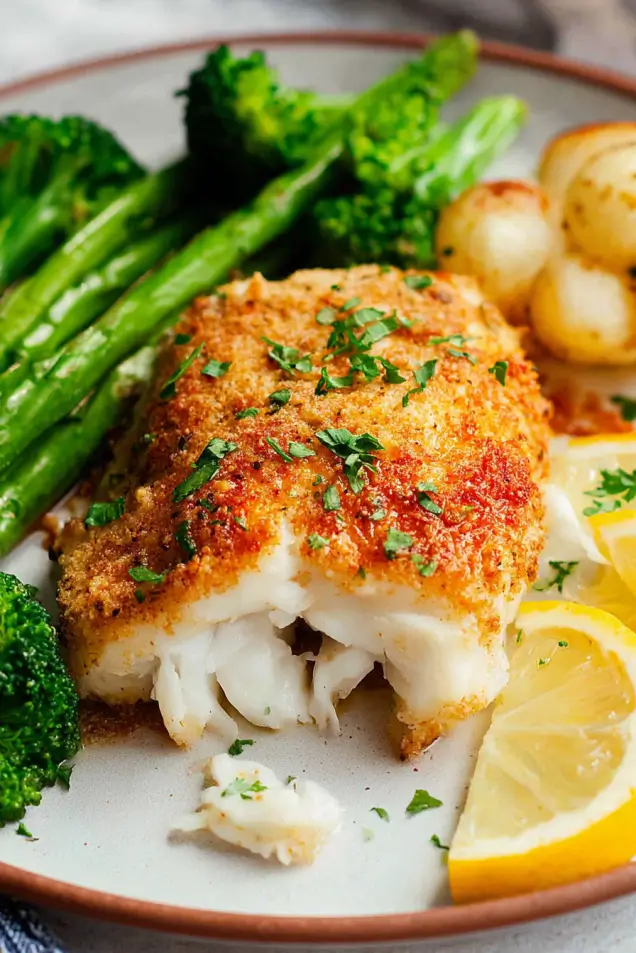
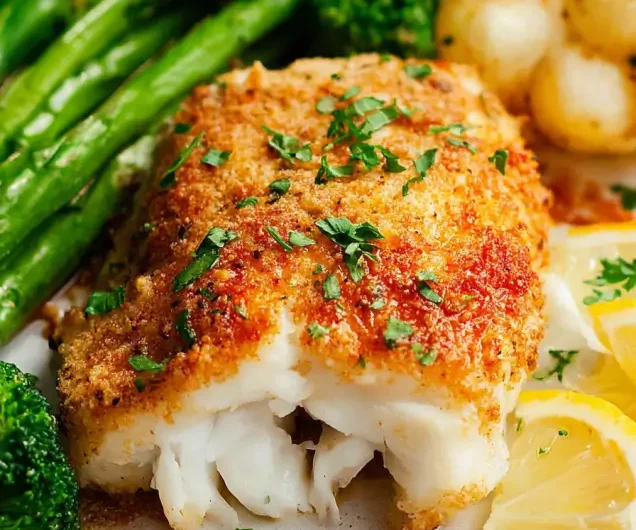
The texture is what gets people every time — that satisfying flake when you press your fork in, the slightly crisp exterior giving way to this buttery, tender inside. It doesn’t have that “fishy” smell that puts some people off. It’s clean, light, and genuinely versatile. Pair it with anything. A simple salad. Roasted vegetables. Rice pilaf. Garlic mashed potatoes on a night when you’re feeling yourself.
And from a practical standpoint? Baked halibut is way more forgiving than pan-frying. Less splatter, less stress, less standing over the stove babysitting. You season it, crust it, drizzle it, slide it into a 400-degree oven, and go set the table like the organized adult you occasionally pretend to be.
The Parmesan-Flour Crust Is the Secret Worth Talking About
Most baked halibut recipes stop at basic seasoning and a lemon wedge, which — fine, that’s great — but this version has a parmesan and flour dredge that takes things to a completely different level.
Here’s what happens in the oven: the parmesan melts and crisps simultaneously, creating this savory, golden crust that clings to the fish and gives every bite a little crunch. The flour helps it all stick and forms the base of that crust. Together, they do something almost magical — they mimic the texture of pan-fried fish without actually pan-frying anything.
The One Step Most People Skip (Don’t Skip It)
Pat your fish dry. I’m serious. Take a paper towel and press it gently against each filet before you do anything else. This removes the surface moisture that would otherwise sit between the fish and the flour, making your beautiful crust slide off or turn into a soggy paste. Nobody wants soggy paste.
Once the fish is dry, the seasoning sticks better, the flour mixture adheres properly, and the whole thing bakes up with that crispness that makes people ask “wait, did you fry this?” And you just smile and say nothing.
How to Bake Halibut Without Drying It Out
This is the question everyone has, and it’s a fair one. Halibut is a lean fish, which means it doesn’t have a lot of fat protecting it from overcooking. Dry it out and you’ve got expensive, sad fish. So let’s not do that.
The olive oil drizzle is non-negotiable. After dredging the filets in the parmesan-flour mix, you drizzle them with olive oil right on the baking sheet. That light coating seals in moisture and helps the crust brown evenly without the fish shriveling or going rubbery. It also adds just a touch of richness that plays beautifully off the brightness of the lemon you’ll squeeze over everything at the end.
The other thing protecting you? The 400-degree oven and 13-minute cook time. Hot and fast is the move with halibut recipes baked this way. A lower temperature drags out the process and dries the fish out gradually. High heat gives you that quick crust formation while the inside stays tender and just barely cooked through — which is exactly where you want it.
A quick tip if your filets are on the thinner side: start checking around 10–11 minutes. The fish is done when it flakes easily with a fork and has lost its translucency. It should look opaque all the way through but still feel moist when you press it lightly.
Finishing Touches That Make a Real Difference
Fresh Lemon and Parsley — Don’t Underestimate Them
Once the fish comes out of the oven, you’ve got about thirty seconds before it’s on the plate and people are already hovering. Add the lemon wedges and the fresh minced parsley, and please, actually use them — they’re not just decoration.
The lemon juice cuts through the richness of the parmesan crust and the olive oil, brightening everything up so the dish feels fresh rather than heavy. The parsley adds a little color and a faint herby note that rounds out the flavors without competing with anything.
It’s one of those finishing moves that seems almost too simple, but leave it out and you’ll notice something’s missing.
What to Serve with Baked Halibut
Honestly this is the fun part because baked halibut plays well with basically everything. A few favorites:
- Roasted asparagus or green beans — toss them with olive oil and throw them in the oven alongside the fish, they’ll be ready at the same time
- Garlic butter rice — the mild, slightly sweet flavor of halibut pairs beautifully with something buttery and savory
- A simple arugula salad with lemon vinaigrette — keeps things light and adds a peppery contrast
- Crusty bread — for soaking up any pan juices and being generally excellent
On busy weeknights, I usually just do whatever vegetable is already in the fridge, roasted quickly at the same temp. Easy, efficient, no extra dishes.
Why This Is the Only Baked Halibut Recipe You’ll Need
There are a thousand baked halibut recipes out there, and a lot of them are perfectly good. But this one hits a specific sweet spot: it’s simple enough for a weeknight but impressive enough that you’d serve it to guests without a second thought. The parmesan crust gives it that little extra something that makes it feel special, and the whole thing is done in under twenty minutes from start to finish.
Understanding how to bake halibut properly comes down to a few non-negotiables — dry fish, a good crust, enough fat to keep it moist, and a hot oven that works fast. Nail those things and you’ll turn out restaurant-quality fish every single time.
No culinary school required. No fancy equipment. Just a baking sheet, some good fish, and the confidence to stop being intimidated by the seafood counter.
Go get yourself some halibut. You’ve got this.
Easy Baked Halibut Recipe | Juicy & Flaky Oven-Baked Fish Dinner
Cuisine: American4
servings10
minutes13
minutes336
kcalIngredients
4 halibut filets (approximately 6 ounces each)
1 tablespoon kosher salt
1 teaspoon coarse ground black pepper
1 teaspoon garlic powder
½ teaspoon paprika
¼ cup grated parmesan cheese
¼ cup all-purpose flour
¼ cup olive oil
1 lemon, sliced into wedges
2 tablespoons fresh parsley, finely chopped
Directions
- Heat your oven to 400°F. Line a rimmed baking sheet with parchment paper and set it aside.
- Sprinkle the halibut filets evenly on both sides with kosher salt, black pepper, garlic powder, and paprika.
- Combine the grated parmesan and flour in a shallow bowl, stirring until evenly mixed.
- One at a time, press each seasoned filet into the parmesan-flour mixture, turning to coat all sides and pressing lightly so the coating adheres well.
- Lay the coated filets on the prepared baking sheet and drizzle olive oil evenly over the top of each one.
- Bake for 13 minutes, until the crust is golden and the fish flakes easily when tested with a fork.
- Transfer to a serving plate. Finish with a squeeze of fresh lemon and a scatter of chopped parsley.
Notes
- Before seasoning or breading the fish, use a paper towel to pat each filet thoroughly dry. Surface moisture is the enemy of a crisp crust — it prevents the flour from gripping the fish properly and leads to a coating that steams instead of crisps. Dry fish gives you that golden, crunchy exterior you’re going for.
- To keep the halibut moist and tender all the way through, don’t skip the olive oil drizzle. It creates a light barrier that locks in moisture during baking and helps the parmesan crust brown evenly without the fish drying out underneath.