
Let’s be real for a second: there are days when the world feels a little too loud, your inbox is a disaster zone, and the weather is doing that gloomy, drizzly thing that makes you want to cancel every plan you’ve ever made. On those days, salad is an insult. You don’t need a “light bite.” You need a culinary hug.
Enter this Beef Stew with Carrots and Potatoes.
This isn’t just a recipe; it’s a slow-motion magic trick. You start with some humble, chunky pieces of beef and a few dusty root vegetables, and a few hours later, your entire house smells like a high-end French bistro where the waiter calls you “darling” and everything is butter-based. It’s rich, it’s savory, and it has that thick, glossy gravy that makes you want to lick the bowl (no judgment here, we’re all friends).
Why This Isn’t Your Average “Mystery Meat” Stew
We’ve all been there—the school cafeteria stew where the beef is tough enough to sole a shoe and the carrots are mushy orange ghosts. We are not doing 그 (that) today.
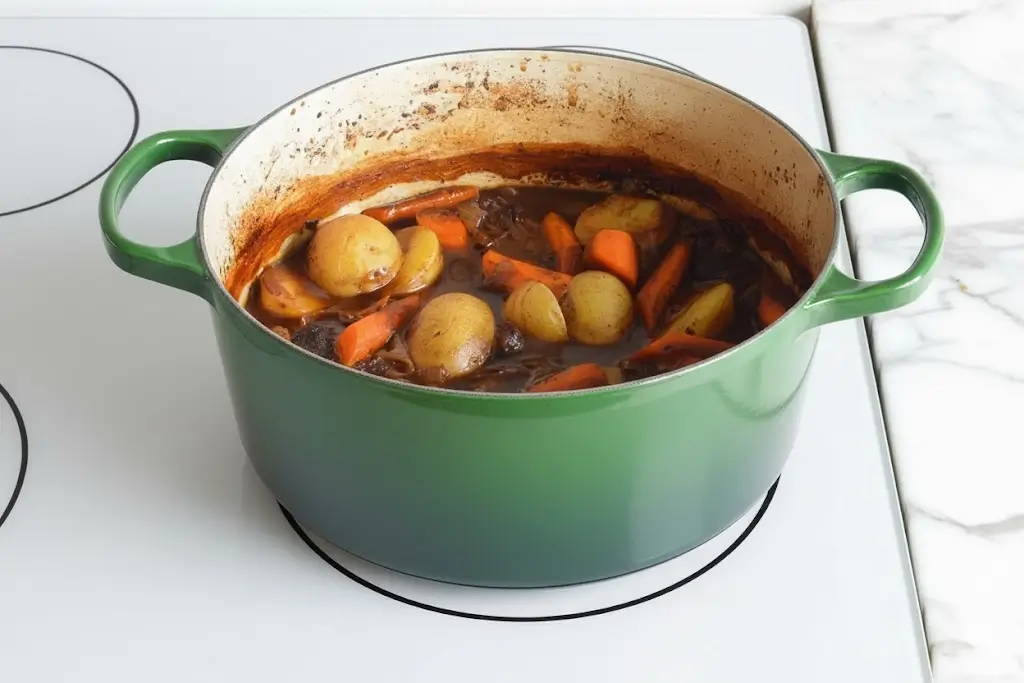
The secret to a life-changing beef stew is all about the Maillard reaction. That’s a fancy science term for “brown your meat until it looks delicious.” When you sear that beef chuck in a hot Dutch oven, you’re creating deep, complex flavor compounds that simply don’t exist if you just toss raw meat into liquid. It’s the difference between a grainy black-and-white photo and 4K Ultra HD.
The Magic of the Dutch Oven
If you don’t own a Dutch oven yet, consider this your sign from the universe to go get one. There is something incredibly satisfying about the weight of the lid and the way it distributes heat. However, if you’re currently rocking a standard heavy pot on the stovetop, don’t panic! I’ve got notes for you down below. The goal is low and slow—we’re coaxing the collagen in that beef to melt into gelatin, which gives the sauce that “velvet” texture we’re all chasing.
Secrets to Success: The Flavor Builders
You might look at the ingredient list and see balsamic vinegar and sugar and think, “Wait, am I making a dessert or a savory dinner?” Trust me on this one.
- The Acid Kick: The balsamic vinegar acts as a deglazing agent. It cuts through the richness of the beef fat and brightens the whole pot. You won’t taste “vinegar” in the end; you’ll just taste a version of the stew that feels more alive.
- The Sugar Balance: Just a tiny pinch of sugar balances the acidity of the tomato paste and the tannins in the red wine. It’s the “secret sauce” element that makes people go, “What is in here? I can’t put my finger on it.”
- The Wine Factor: Use a wine you’d actually want to drink. If it’s labeled “Cooking Wine,” put it back on the shelf and back away slowly. A decent Cabernet or Merlot works wonders here. The alcohol cooks off, leaving behind a sophisticated depth that water or broth alone just can’t touch.
Kitchen Confessions: A Few Tips from My Messy Counter
I’ve made this stew more times than I can count, and I’ve made every mistake in the book so you don’t have to.
- Don’t be a Pan-Crowder: I know, I know. You want to get the browning over with so you can sit on the couch. But if you dump all the meat in at once, it’ll steam instead of sear, and you’ll end up with gray, sad beef. Do it in batches. Give the meat some personal space!
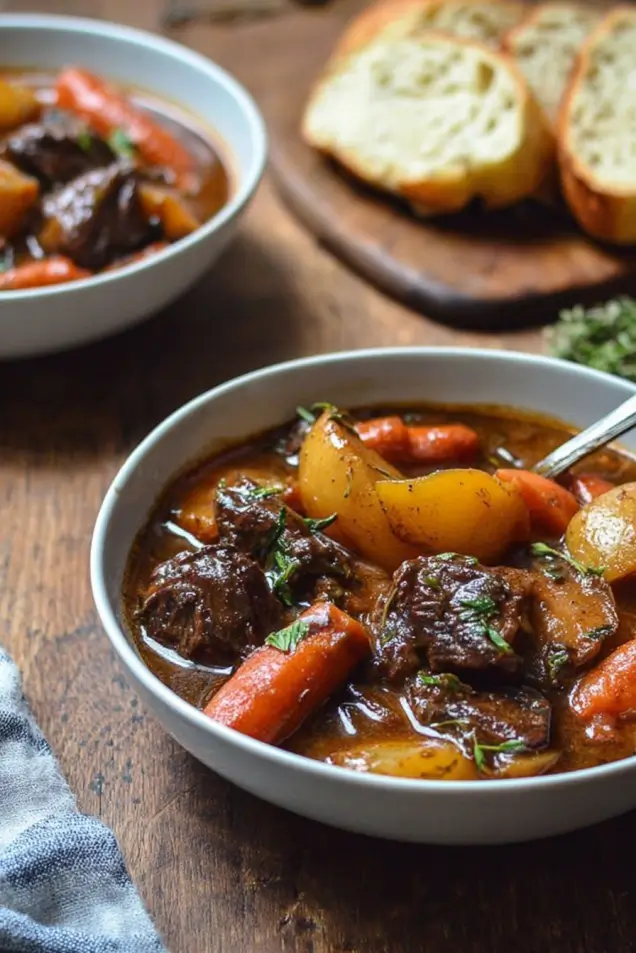
- The Potato Pivot: I use baby Yukon Golds because they hold their shape like champs. If you use Russets, they might disintegrate a bit, which thickens the stew but loses that “chunky” aesthetic.
- The Wait is Worth It: Here is the hard truth: this stew is actually better the next day. Something happens in the fridge overnight where the flavors stop being individual ingredients and start being a cohesive team. If you’re planning a dinner party, make this on Saturday for a Sunday feast. You’ll thank me later.
Is it Freezer Friendly? (The Short Answer: Yes!)
Life happens. Sometimes you make a giant pot of stew and then remember you have a late meeting or a sudden craving for takeout. The good news is that this freezes beautifully.
The only “pro tip” here is to make sure it’s completely cool before you seal it up. Tossing hot stew into a freezer container is a recipe for ice crystals and “freezer funk.” Treat your future self to a high-quality meal by storing it in an airtight container or a heavy-duty freezer bag. It stays good for up to three months, making it the ultimate “emergency dinner.”
How to Serve This Masterpiece
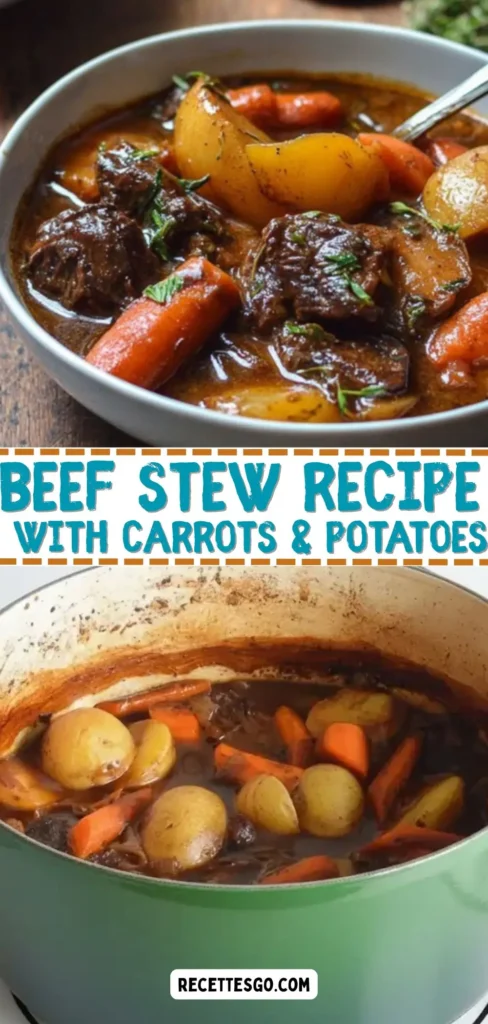
While the potatoes and carrots make this a “one-pot meal,” I’m a firm believer that every stew needs a “vehicle” for the sauce.
- Crusty Bread: A warm baguette with a thick layer of salted butter is the gold standard.
- Mashed Potatoes: If you’re feeling particularly indulgent, serve the stew over more mashed potatoes. It’s starch-on-starch crime, but it’s delicious.
- A Simple Green Salad: To convince yourself you’re being healthy. (But let’s be honest, we’re here for the beef).
The Official Recipe Card
Below you’ll find the nitty-gritty details. Put on some jazz, pour yourself a glass of that red wine you bought for the recipe, and let’s get cooking.
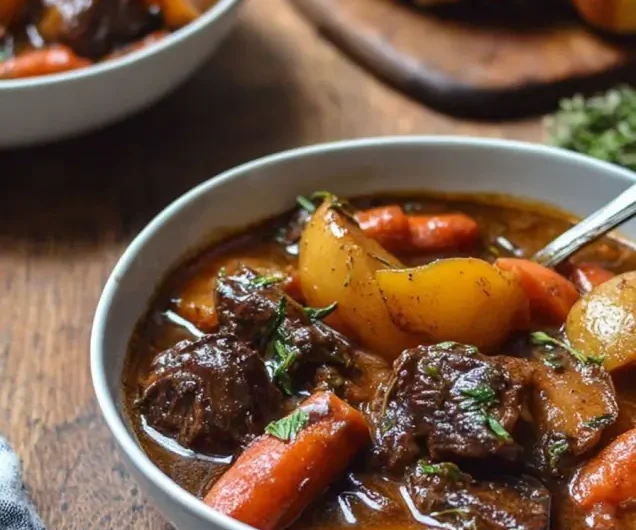
Beef Stew Recipe with Carrots & Potatoes
6
servings30
minutes3
hours30
minutes539
kcalThis hearty, slow-cooked stew features tender beef chuck, vibrant carrots, and buttery baby potatoes. The secret to its rich flavor lies in the red wine reduction and the low-and-slow braising process.
Ingredients
3 lbs boneless beef chuck (well-marbled), cut into 1½-inch cubes
2 tsp salt
1 tsp freshly ground black pepper
3 tbsp olive oil, divided
2 medium yellow onions, cut into 1-inch chunks
7 cloves garlic, peeled and smashed
2 tbsp balsamic vinegar
1½ tbsp tomato paste
¼ cup all-purpose flour
2 cups dry red wine
2 cups beef broth
2 cups water
1 bay leaf
½ tsp dried thyme
1½ tsp sugar
4 large carrots, peeled and cut into 1-inch diagonal chunks
1 lb small white boiling potatoes (baby Yukons), halved
Fresh chopped parsley for garnish (optional)
Directions
- Prep and Sear the Beef
- Preheat your oven to 325°F (165°C) with the rack positioned in the lower-middle spot.
- Pat the beef dry with paper towels and season thoroughly with salt and pepper.
- In a large Dutch oven or heavy soup pot, heat 1 tablespoon of olive oil over medium-high heat until shimmering.
- Brown the meat in three separate batches to avoid crowding (this ensures a proper crust). Sear each batch for about 5 minutes, adding an additional tablespoon of oil for each new batch.
- Transfer the browned meat to a plate and set aside.
- Deglaze and Build the Base
- In the same pot, add the onions, smashed garlic, and balsamic vinegar. Cook for about 5 minutes, using a wooden spoon to scrape up the flavorful brown bits (fond) from the bottom.
- Stir in the tomato paste and cook for 1 minute.
- Return the beef and any accumulated juices to the pot. Sprinkle the flour over the meat and stir for 1–2 minutes until the flour has dissolved.
- The First Braise
- Pour in the red wine, beef broth, and water. Add the bay leaf, thyme, and sugar.
- Stir well to loosen any remaining bits from the bottom and bring the liquid to a boil.
- Cover the pot with a tight-fitting lid and transfer it to the oven. Braise for 2 hours.
- Add Vegetables and Finish
- Carefully remove the pot from the oven. Stir in the carrots and potatoes.
- Cover and return to the oven for approximately 1 hour more. The stew is ready when the vegetables are tender, the meat is fork-tender, and the sauce has thickened.
- Discard the bay leaf. Taste and adjust salt or pepper if needed.
- Serving
- Serve immediately, garnished with fresh parsley if desired.
- Pro Tip: This stew tastes even better the next day! You can cool it, refrigerate it overnight, and reheat it covered over medium heat.
Notes
- Stovetop Method: If you don’t have an oven-safe pot, follow the same steps but simmer the stew on the stovetop at the lowest possible setting. The timing remains the same.
- Make-Ahead: Store in the refrigerator for up to 3 days.
- Freezer Instructions: Allow the stew to cool completely before transferring to an airtight container. Freeze for up to 3 months. To serve, thaw overnight in the fridge and reheat on the stovetop over medium-low heat.
I’d love to see how your stew turns out! Did you add extra garlic? (I always do). Did you swap the wine for extra broth? Tag me in your photos or drop a comment below. Happy braising!