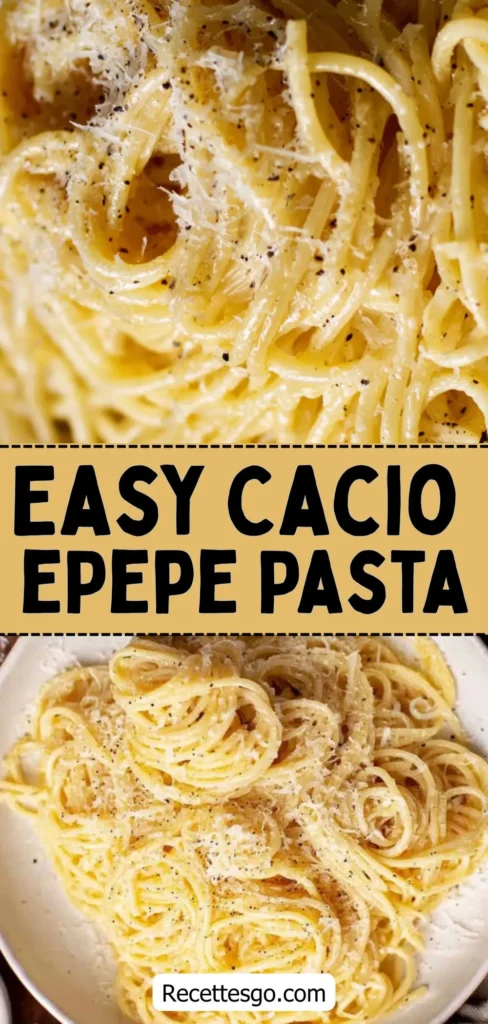

Let me tell you about the first time I made cacio e pepe. Picture this: I’m standing in my kitchen, confidently tossing pasta like I’ve seen a thousand Italian nonnas do on YouTube, thinking I’ve got this completely under control. Four ingredients. How hard could it possibly be?
Spoiler alert: I ended up with a clumpy, sad mess that looked like someone had glued cheese curds to spaghetti. My cat wouldn’t even sniff it, and she eats bugs.
That humbling experience sent me down a rabbit hole of research, experimentation, and more than a few late-night pasta sessions. Now, after perfecting this cacio e pepe recipe through what I can only describe as delicious trial and error, I’m sharing everything I’ve learned so you don’t have to suffer through the cheese-clump phase like I did.
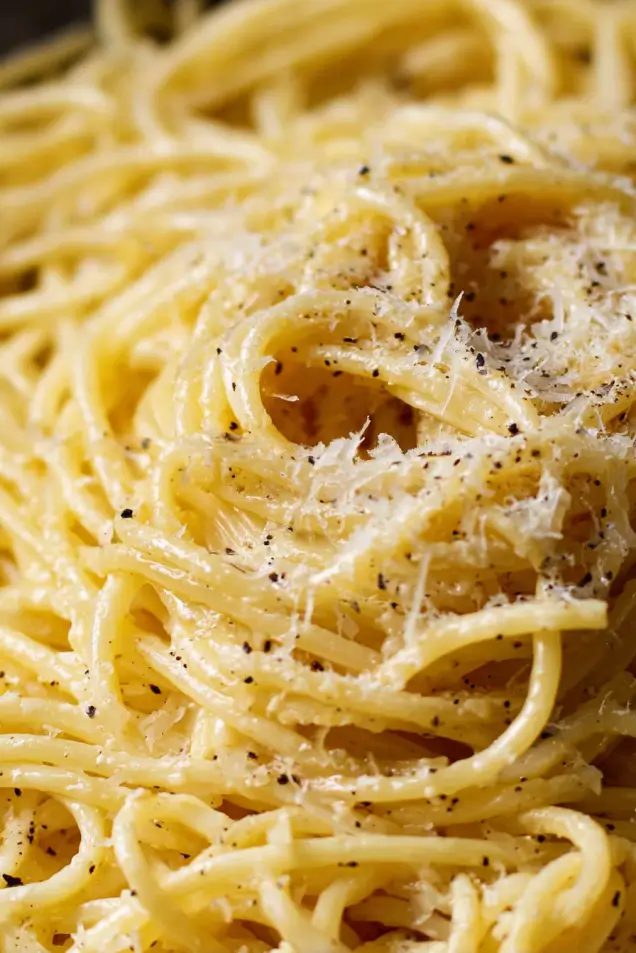
What Even Is Cacio e Pepe?
The name literally translates to “cheese and pepper” in Roman dialect, which pretty much tells you everything you need to know about Italian cooking philosophy. Why use ten ingredients when four will do? This bucatini cacio e pepe (or spaghetti, if that’s your vibe) has been a staple in Rome for centuries, originally fueling shepherds who needed something filling that wouldn’t spoil during long journeys.
There’s something almost rebellious about a dish this simple becoming legendary. In a world of complicated foam-topped, truffle-drizzled, seventeen-component plates, cacio e pepe pasta stands there with its arms crossed saying, “I don’t need all that.”
And honestly? It doesn’t.
Why This Roman Classic Deserves a Spot in Your Rotation
I rotate through a lot of recipes for this blog—it’s literally my job—but cacio e pepe has become my go-to “I have nothing in the fridge but I still want something incredible” dinner. There’s a reason this dish has survived centuries without anyone feeling the need to mess with it.
The magic happens in the contrast. You’ve got this sharp, almost aggressive Pecorino Romano fighting it out with the warmth of freshly cracked black pepper, all wrapped around perfectly al dente pasta. Every bite has this savory punch that makes you close your eyes involuntarily. You know that thing where food is so good you have to sit with it for a second? That.
Plus, and I cannot stress this enough, you can go from “I’m hungry” to “I’m eating” in about fifteen minutes. On a Tuesday. After a long day. When you’ve already changed into your stretchy pants.
The Science Behind the Silky Sauce (Yes, There’s Science)
Here’s where things get nerdy, and I make no apologies for it.
The whole trick to cacio e pepe—the thing that separates a glorious, glossy sauce from a stringy cheese disaster—comes down to something called emulsification. Basically, you’re convincing fat and water to play nice together, which they normally refuse to do.
Your secret weapon? Pasta water. That starchy, cloudy liquid you usually dump down the drain is actually liquid gold for this recipe. The starches released by the cooking pasta act as a binder, creating a smooth sauce that coats every strand instead of clumping into sad little cheese islands.
I learned this the hard way, obviously. My first attempt involved adding cheese directly to hot pasta with zero pasta water. The cheese seized up faster than I could say “what the—” and I was left scraping solidified Pecorino off my pot for twenty minutes.
The proteins and starches in that reserved pasta water physically prevent the cheese proteins from bonding too tightly to each other. They create a buffer, essentially tricking the cheese into staying creamy and smooth. Science is cool, especially when it results in better pasta.
The Cheese Situation: Let’s Get Real
Can we talk about cheese for a minute? Because this is where most cacio e pepe attempts go sideways.
I know the pre-shredded bags are tempting. They’re right there, already done, calling to you from the refrigerated section. But those bags contain anti-caking agents—usually cellulose or potato starch—that prevent the cheese from melting smoothly. They’re designed to keep the shreds from sticking together in the bag, which means they’ll also refuse to melt into a proper sauce.
You need to grate your own. I know, I know. Extra step. But trust me, the five minutes you spend with a microplane or box grater will completely transform your results. Get yourself a nice wedge of Pecorino Romano—the real stuff, aged and sharp—and grate it fine. Really fine. Almost fluffy.
The same goes for the Parmesan. Good quality, finely grated. These two cheeses together create a flavor that’s more complex than either one alone. The Pecorino brings that salty, sheepy tang while the Parmesan adds nuttiness and depth.
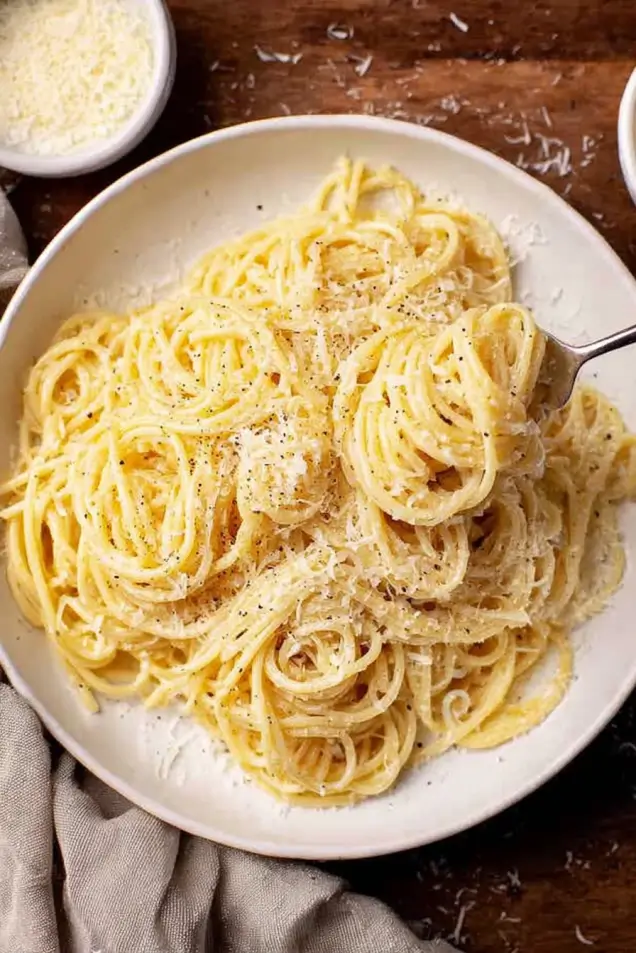
Temperature: The Unsung Hero Nobody Talks About
Everyone focuses on the cheese and the pasta water, but temperature control is what separates restaurant-quality cacio e pepe from homemade heartbreak.
Too hot, and your cheese proteins tighten up and clump. Too cold, and nothing melts properly. You’re looking for that sweet spot where everything comes together into glossy, clingy perfection.
This is why you work with the pasta water off direct heat, or at least on very low heat. You want warmth, not sizzle. The residual heat from the pasta and the warm water should be enough to melt the cheese gently while those beautiful starches do their emulsification thing.
I think of it like coaxing a scared cat out from under the bed. Patience. Gentle movements. No sudden bursts of heat that send everything into panic mode.
Common Mistakes (So You Don’t Repeat My Failures)
Rinsing your pasta: Please, I beg you, do not rinse your pasta after draining. All that gorgeous starch you’ve been building up washes right down the drain. That starch is doing important work.
Skipping the pepper toast: Some recipes call for toasting your black pepper briefly in the pan before building the sauce. It’s not strictly necessary, but it does bloom the volatile oils and makes the pepper more aromatic. Worth the extra thirty seconds if you’re feeling fancy.
Going too heavy on the cheese: I know it seems counterintuitive for a dish literally named after cheese, but dumping in too much at once can overwhelm the emulsion. Add it gradually, whisking constantly, and let each addition incorporate before adding more.
Forgetting to reserve pasta water: I have done this. I have stood at the sink, watching perfectly starchy water disappear, realizing my mistake exactly one second too late. Set a reminder. Put a measuring cup in the colander. Do whatever you need to do.
Making It Your Own
Traditional Roman nonnas might come for me, but I think there’s room for personalization here. Some nights I add a handful of crispy pancetta. Sometimes I finish with a drizzle of good olive oil and extra pepper. I’ve even thrown in some wilted greens when I’m feeling virtuous.
The bones of this dish are so solid that they can handle a little improvisation. Just don’t go too crazy—you still want the cheese and pepper to be the stars.
Cacio e pepe taught me that simplicity requires precision, and that the best dishes often come from the fewest ingredients. Every time I make it now, I think about those Roman shepherds carrying their cheese and pepper into the hills, creating something timeless out of necessity. That’s the kind of cooking that speaks to me.
Your first attempt might be perfect. It might also be a disaster. Either way, you’ll learn something, and you’ll eat pasta, and honestly? Both of those outcomes are wins in my book.
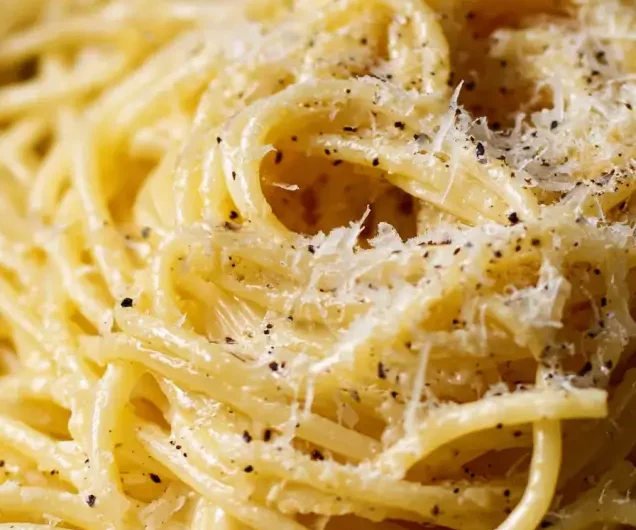
Cacio e Pepe Recipe (Authentic Bucatini Cacio e Pepe Pasta)
4
servings5
minutes10
minutes782
kcalLearn how to make authentic cacio e pepe at home with this simple Italian classic. This creamy bucatini cacio e pepe pasta uses just a few ingredients for maximum flavor.
Ingredients
1 pound spaghetti
2 cups Pecorino Romano cheese, grated
1 cup grated parmesan, good quality
3/4 teaspoon coarse ground black pepper
2 tablespoons olive oil
Directions
- Boil your spaghetti until it’s about one minute away from fully cooked according to package timing.
- Before draining, scoop out 1 cup of the starchy cooking liquid and set it aside. Drain the pasta completely but skip rinsing it.
- Return that reserved pasta water to your empty pot and warm it over medium heat.
- Gradually whisk the grated Pecorino Romano, Parmesan, and black pepper into the warm water until everything comes together smoothly.
- Continue whisking for roughly 30 seconds, then drizzle in the olive oil while still whisking to incorporate.
- Toss the drained spaghetti into the pot and mix thoroughly until every strand is coated.
- The finished sauce should cling nicely to the pasta rather than sitting in a puddle at the bottom. If it seems too loose, let it cook while stirring for an additional 30 seconds to tighten up.
- Plate immediately and top with extra cheese and freshly cracked pepper if you’d like.
Notes
- The most common hiccup with this dish is ending up with clumpy cheese instead of a smooth, glossy coating. Avoiding this starts with your cheese selection—ditch the pre-shredded bags and skip any imitation products. Instead, grab a quality aged wedge and grate it yourself using the finest setting possible.
- Equally important is that cloudy pasta water you saved earlier. The starch released during cooking acts as a natural emulsifier, preventing the melting cheese from seizing up and sticking to itself. This one simple step makes all the difference between silky perfection and a stringy mess.
You may like: Cheesecake Factory Pasta Da Vinci | Easy Copycat Recipe