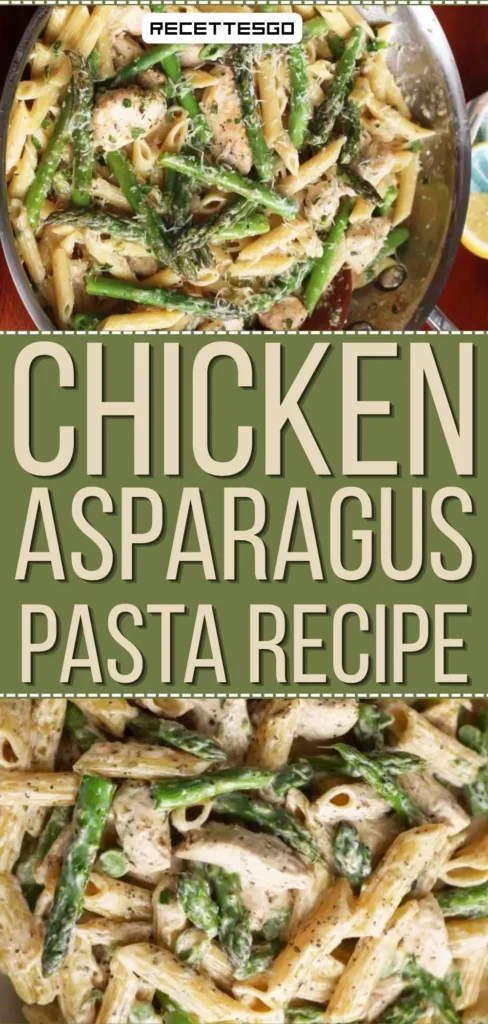

Okay, so let me paint you a picture. It’s a Tuesday. You’re tired. The fridge has some chicken breasts, a bunch of asparagus that’s been quietly judging you for three days, and half a block of Parmesan. You could order takeout. Or — and hear me out — you could make this chicken and asparagus pasta and feel like an absolute kitchen genius by the time you sit down to eat.
This chicken asparagus pasta recipe is one of those dishes that sounds way fancier than it actually is. Creamy Parmesan sauce, bright lemony finish, tender chicken, crisp-tender asparagus — all tossed together with pasta in about 30 minutes. It’s the kind of meal that makes people ask, “Wait, you made this on a weeknight?”
Yes. Yes, you did.
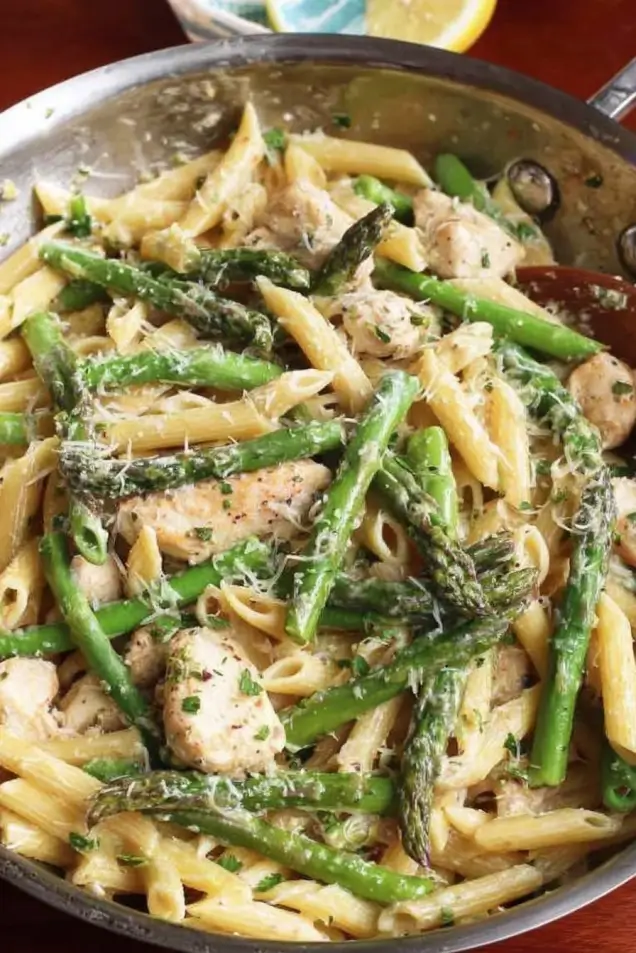
Why This Recipe Just Works
There are a lot of chicken pasta recipes floating around the internet, and honestly? Most of them are fine. But this lemon asparagus chicken pasta hits differently because of one thing: balance.
You’ve got richness from the heavy cream and Parmesan, brightness from the lemon zest and juice, a little savory depth from the garlic and shallot, and that fresh pop from the asparagus and parsley. It’s not heavy in a “I need a nap immediately” kind of way. It’s more like… comfortably satisfying. The kind of pasta you eat and then immediately start thinking about when you can have it again.
Also, asparagus in pasta is criminally underrated. People default to broccoli or spinach (totally valid, no shade), but asparagus brings this slightly grassy, almost nutty flavor that plays beautifully with the creamy sauce. Once you try it, you’ll start wondering why you weren’t doing this all along.
The Sauce: Where the Magic Actually Happens
Let’s talk about the sauce for a second, because it deserves its own moment.
It starts simple — shallot, garlic, a good splash of liquid to deglaze the pan (more on that in a second), then heavy cream and Parmesan. That’s it. But the technique is what makes it sing.
The Deglaze Step Nobody Skips Twice
When you sear the chicken, you get all these gorgeous browned bits stuck to the bottom of the pan. Don’t you dare wash that pan. Those bits are flavor gold. When you add a splash of liquid — water, pasta water, white wine, or chicken stock — and scrape them up, they dissolve right into your sauce and add this deep, savory undertone that you can’t get any other way.
The wine version is extra fancy, not gonna lie. But even plain pasta water works surprisingly well. The starch in it also helps the sauce cling to the pasta later on, so don’t dump that water down the drain before you reserve some.
Freshly Grated Parmesan — Not Optional, Sorry
This is one of those moments where I have to be real with you: pre-shredded Parmesan from the bag will not behave the same way. It’s coated with anti-caking agents that make it clump and resist melting smoothly. Freshly grated Parmesan melts right into the cream and becomes this silky, cohesive sauce rather than a clumpy mess. Five extra minutes of grating, maximum. Worth every second.
The Lemon Situation
The lemon zest and lemon juice at the end are genuinely transformative. Without them, this would be a very good creamy chicken pasta. With them, it becomes a great one. The zest especially — it lifts everything, cuts through the richness, and makes the whole dish feel fresh instead of heavy.
That said, if you’re not a huge lemon person, you can pull back. The notes suggest reducing to one teaspoon of zest for a milder flavor. Totally valid. But if you’re on the fence, I’d say trust the full amount at least once before you start dialing it down.
This is also part of what makes this dish stand out among chicken and asparagus pasta recipes — a lot of creamy pasta recipes skip the acid entirely and end up feeling one-note. The lemon here isn’t just a garnish thing. It’s structural.
Tips That’ll Save You From Yourself
Don’t Crowd the Pan — Seriously
This gets a mention in the notes and I want to echo it loudly: cooking in batches is not optional if your pan is smaller or if you’re doubling the recipe. When you overcrowd chicken in a pan, it steams instead of sears, and you lose all that beautiful golden-brown crust. Same goes for the asparagus. Give everything space, let it do its thing.
The Asparagus Cooks Fast
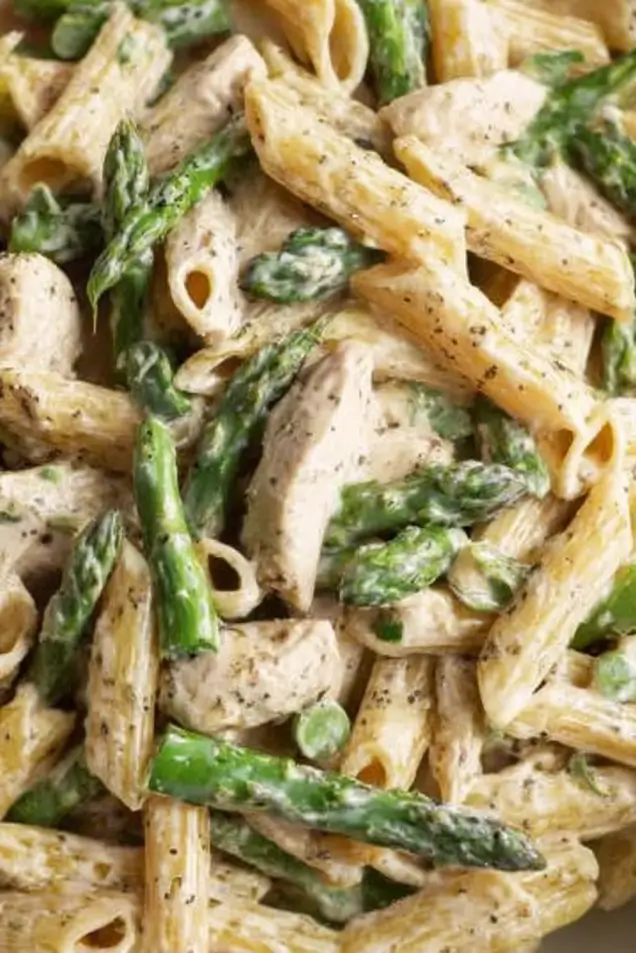
One minute. That’s all it needs. You want it tender-crisp, with a little snap still left, not soft and droopy. Since it goes back into the hot sauce at the end, it’ll carry over a bit more. Take it off heat while it still looks slightly underdone and you’ll hit that perfect texture once it all comes together.
Keep That Pasta Water
You might not need it. But if your sauce tightens up too much while you’re tossing everything together, a small splash of starchy pasta water is the move. It loosens the sauce without watering it down. Old restaurant trick, and it works every single time.
Making It Your Own
One of the best things about this lemon asparagus chicken pasta is how adaptable it is once you know the base. A few ideas:
- Swap the protein. Shrimp works beautifully here instead of chicken. So does Italian sausage if you want something richer and more intense.
- Add a little heat. A pinch of red pepper flakes into the garlic-shallot step gives the whole dish a gentle kick without overpowering anything.
- Go lighter on the cream. Half-and-half can work if you want a thinner sauce — just know it won’t reduce quite the same way, so let it simmer a little longer.
- Try different pasta shapes. Penne is the classic call here because the sauce catches in the tubes, but rigatoni, fusilli, or even farfalle all work great.
When Should You Make This?
Honestly? Whenever. This chicken asparagus pasta recipe genuinely fits weeknight dinners where you want something comforting but not fussy. It also scales up cleanly if you’re cooking for more people, which makes it solid for casual dinner parties where you want to impress people without spending three hours in the kitchen.
It’s especially good in spring and early summer when asparagus is in peak season — bright, tender, and actually affordable at the grocery store. But frozen asparagus tips work fine in a pinch if you’re making this in January and just really need it.
The Bottom Line
If you’ve been sleeping on chicken and asparagus pasta recipes, this is the one that’s going to change your mind. It’s got everything: speed, flavor, that creamy-bright balance that keeps you going back for more forkfuls. The ingredient list is approachable, the method is straightforward, and the result tastes like something you’d pay real money for at a restaurant.
Make it once and it becomes a rotation staple. That’s just what happens. Don’t say I didn’t warn you.
Chicken Asparagus Pasta Recipe – Easy Creamy Dinner Idea
4
servings10
minutes25
minutes722
kcalIngredients
8 oz (225 g) uncooked pasta, penne or similar shape
1 tbsp (15 ml) olive oil
1 tbsp (14 g) unsalted butter
1¼ lbs (560 g) boneless chicken breasts, chopped into bite-sized chunks
½ tsp ground black pepper
½ tsp kosher salt
½ tsp Italian seasoning
1 tsp (5 ml) olive oil
8 oz (225 g) fresh asparagus, ends trimmed and cut into roughly 3-inch lengths
1 tsp (5 ml) olive oil
1 small shallot, finely diced
3 garlic cloves, minced
¼ cup (60 ml) deglazing liquid — pasta water, plain water, dry white wine, or chicken broth
1 cup (240 ml) heavy cream (known as double cream in the UK)
½ cup (50 g) Parmesan cheese, finely grated
¼ tsp ground black pepper
¼ tsp kosher salt
2 tsp fresh lemon zest
2 tsp fresh lemon juice
2 tsp flat-leaf parsley, roughly chopped
Directions
- Fill a large pot with water, season it generously with salt, and bring it to a rolling boil. Cook the pasta until just al dente according to package directions. Before draining, scoop out about ½ cup of the starchy cooking water and set it aside — you may want it later to loosen the sauce. Drain the pasta and set aside.
- Place a large 12-inch skillet over medium heat and add 1 tablespoon of olive oil along with the butter. Once the butter has melted and the pan is hot, add the chicken pieces. Season them with the ½ teaspoon each of salt, black pepper, and Italian seasoning. Cook, stirring occasionally, until the chicken is golden on the outside and fully cooked through. Remove from the pan and set aside on a plate.
- Add 1 teaspoon of olive oil to the same skillet. Toss in the asparagus pieces and sauté for about 1 minute — just long enough to take the raw edge off while keeping a little bite. Remove from the pan and set aside with the chicken.
- Pour the remaining 1 teaspoon of olive oil into the skillet. Add the minced shallot and garlic and cook for around 1 minute, stirring frequently, until softened and fragrant.
- Pour in your chosen deglazing liquid — a splash is all you need. Use a wooden spoon or spatula to scrape up all the caramelized bits stuck to the bottom of the pan. Let the liquid bubble and reduce for a minute or so.
- Add the heavy cream to the skillet, followed by the grated Parmesan, ¼ teaspoon black pepper, and ¼ teaspoon salt. Stir and cook over medium heat until the cheese is fully melted and the sauce has thickened just enough to coat the back of a spoon.
- Add the drained pasta back to the skillet along with the reserved chicken and asparagus. Stir in the lemon zest and lemon juice, then toss everything together until evenly coated in the sauce. If the sauce feels too thick at this point, add a small splash of the reserved pasta water and toss again.
- Do a final taste test and adjust the salt or pepper as needed. Scatter the chopped parsley over the top and serve immediately.
Notes
- Batch cooking: If your skillet is on the smaller side, cook the chicken and asparagus in separate batches rather than all at once — crowding the pan causes steaming instead of proper browning.
- Parmesan tip: Grate your Parmesan fresh from the block for the smoothest, creamiest sauce. Pre-packaged shredded cheese often contains anti-caking additives that prevent it from melting cleanly.
- Lemon preference: The 2 teaspoons of zest gives the dish a noticeable citrus brightness. If you prefer a subtler lemon note, scale the zest back to 1 teaspoon.
- Sauce too thick? A small pour of the reserved pasta water will bring it back to the right consistency without diluting the flavor.