
There’s something almost theatrical about making Chicken au Poivre. The sizzle of meat hitting a screaming-hot pan, the dramatic hiss when brandy meets fond, the way cream transforms into something silky and luxurious right before your eyes. It’s the kind of dish that makes you feel like you should be wearing a crisp white apron in a Parisian kitchen, even if you’re actually standing in your socks on a Tuesday night.
I’ll be honest—the first time I attempted this recipe, I was convinced I’d somehow mess it up. French cooking has this reputation for being fussy and unforgiving, right? But here’s the secret nobody tells you: Chicken au Poivre is actually one of the most approachable French dishes you can make. Fifteen minutes, maybe twenty if you’re taking your time, and you’ve got restaurant-quality food on the table.
What Exactly Is Chicken au Poivre?
Au poivre literally translates to “with pepper,” and traditionally, this dish features steak coated in crushed peppercorns and finished with a creamy cognac sauce. The chicken version takes all those same bold, warming flavours and applies them to something a bit more weeknight-friendly.
The magic happens in layers. You’ve got the sharp bite of coarsely crushed black peppercorns, the warmth and depth from brandy or cognac, the richness of beef stock (yes, beef—we’ll get to that), and finally that silky cream pulling everything together into something almost indulgent.
What I love about this dish is the contrast. The pepper doesn’t just sit on top making your tongue burn—it becomes part of the sauce, mellowing out while still delivering that distinctive kick. Every bite has this complex warmth that builds but never overwhelms.
Why This Recipe Actually Works
The Chicken Situation
Slicing chicken breasts horizontally into thin steaks isn’t just for show. Thinner pieces mean more surface area for browning, which means more of those golden, caramelised bits that eventually become the foundation of your sauce. Plus, they cook quickly and evenly—no more sawing into chicken to check if the centre’s done.
The salt goes on before cooking, but pepper? That stays out until the sauce stage. Seems counterintuitive for a peppercorn dish, but trust the process. Season the chicken with pepper now, and by the time everything’s done, you’ll feel like you’ve been chewing on a handful of peppercorns. Not pleasant.
The Brandy Moment
Here’s where things get exciting. That brandy or cognac isn’t optional flavour—it’s the soul of au poivre. When it hits the hot pan and bubbles away, it’s doing two things: lifting all those beautiful browned bits (called fond, if you want to sound fancy at dinner parties) off the bottom of the pan, and leaving behind this incredible depth that you simply cannot replicate with anything else.
Now, a word about the whole turning-off-the-stove thing. I know some people love the drama of flambéing—blue flames leaping up, everyone oohing and aahing. And sure, if you’re comfortable with that and your kitchen setup allows it safely, go for it. But honestly? The sauce tastes exactly the same whether you dramatically set it on fire or just let it simmer away like a normal person. The alcohol cooks off either way.
Why Beef Stock Changes Everything
This threw me the first time I made it. Chicken dish, chicken stock—seems logical, doesn’t it? But pepper sauce needs something with backbone, and beef stock delivers this deep, almost velvety richness that chicken stock just can’t match. Chicken stock here would taste thin, watery, like something’s missing.
If you’ve ever made homemade beef stock and have some stashed in your freezer, this is its moment to shine. The difference between homemade and store-bought is noticeable—more body, more depth, more of that “how did you make this?” factor.
Tips That Actually Make a Difference
Don’t Skip the Resting
When you pull that chicken from the pan, let it sit. Those few minutes aren’t just about temperature—the juices redistribute, and more importantly, those resting juices go back into the sauce later. It’s like a flavour feedback loop.
Watch Your Sauce Reduction
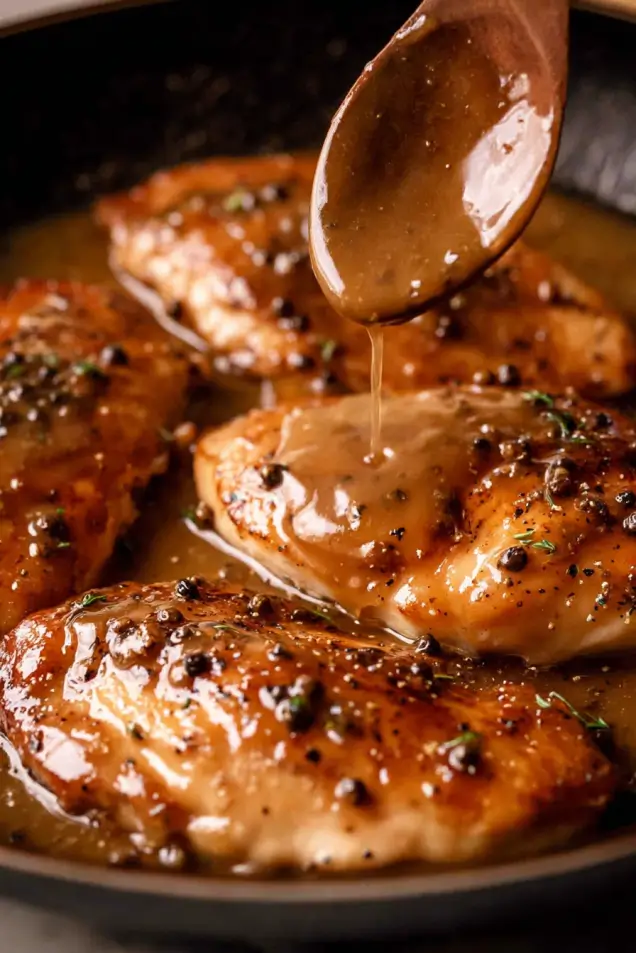
The trickiest part of this whole recipe is knowing when your sauce is done. Too thin and it’ll pool sadly on the plate. Too thick and it becomes gluey. You’re looking for something that coats the back of a spoon but still flows. When you drag a spoon through the pan, the sauce should slowly—slowly—come back together.
Every stove runs differently, so timing will vary. Mine tends to run hot, so my sauce reduces faster than the recipe suggests. Yours might take longer. Just keep watching and stirring.
The Final Simmer Matters
That last step where the chicken goes back into the sauce isn’t just warming things through. The sauce actually darkens and thickens a bit more, and basting the chicken with it builds up this gorgeous glossy coating. It’s where everything comes together.
What to Serve Alongside
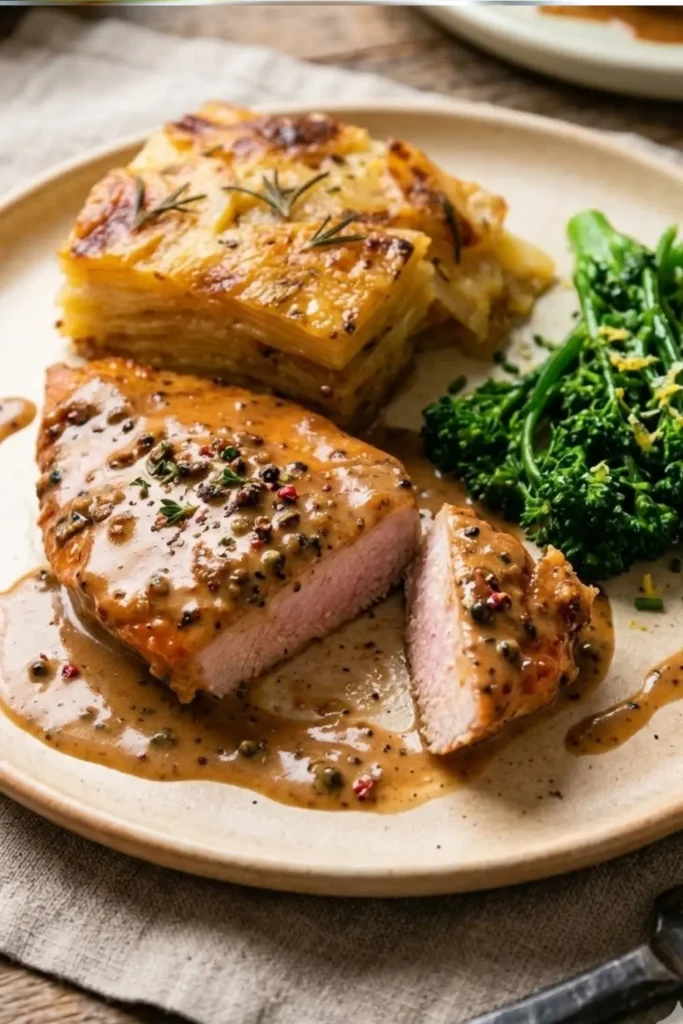
This sauce is crying out for something to soak it up. Creamy mashed potatoes are the classic choice—the way the pepper sauce pools into soft peaks of potato is basically comfort food perfection. But crusty bread works brilliantly too, especially if you’re going for that casual French bistro vibe.
Green beans sautéed with a little butter and garlic make a nice fresh contrast, or a simple green salad dressed with something sharp and mustardy. Nothing too complicated—the chicken should be the star.
A Few Final Thoughts
Chicken au Poivre belongs to that wonderful category of dishes that look and taste impressive but don’t actually require culinary school to pull off. Once you’ve made it a couple of times, you’ll have the rhythm down—sear, deglaze, reduce, cream, finish—and it’ll become one of those recipes you can throw together almost without thinking.
The beauty is in its simplicity. Four main ingredients in the sauce, fifteen minutes of active cooking, and you’ve got something that genuinely tastes like it came out of a professional kitchen. It’s the kind of meal that makes a random weeknight feel a little special, the kind of thing you’d happily serve to guests you’re trying to impress.
Just remember to serve it immediately—this isn’t a dish that likes to wait around. The sauce tightens, the chicken overcooks, and some of that magic dissipates. But honestly, once you smell it coming together in that pan, waiting won’t be a problem anyone at your table has.
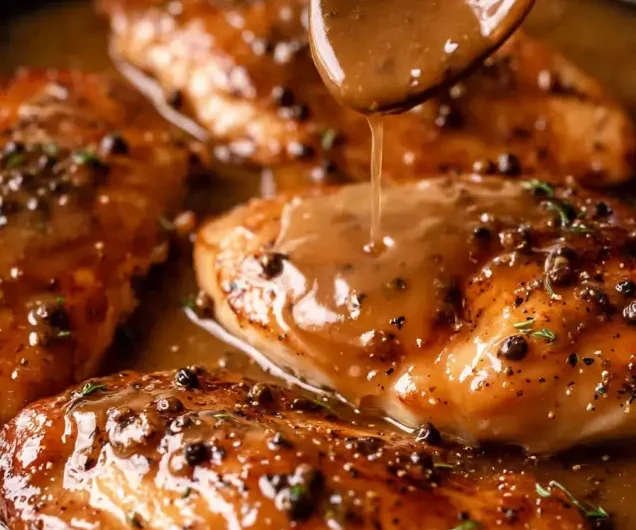
Chicken au Poivre (Creamy Peppercorn Sauce) – Easy French Chicken Recipe
4
servings8
minutes20
minutes442
kcalThis Chicken au Poivre (Creamy Peppercorn Sauce) is a rich, restaurant-quality French chicken recipe you can make at home.
Ingredients
2 large skinless, boneless chicken breasts (250–300g / 8–10oz each) (Note 1)
3/4 tsp cooking salt / kosher salt
2 tbsp vegetable oil (or any neutral-flavoured oil)
2 tsp whole black peppercorns, roughly crushed (Note 2)
1/3 cup brandy or cognac, or masala (Note 3)
1 1/2 cups low-sodium beef stock / broth (Note 4)
3/4 cup thickened / heavy cream (or any full-fat cream)
Directions
- Quick Version:
- Season the chicken with salt, then sear in hot oil until golden and cooked on the outside. Remove from the pan. Deglaze the pan with cognac, then add beef stock and simmer for 4 minutes. Stir in cream and pepper, simmer for 5 minutes. Return the chicken and cook for 3 minutes, spooning sauce over the top. Serve immediately.
- Detailed Method:
- 1. Prepare the Chicken
Slice each chicken breast horizontally to create 4 thinner pieces. Season both sides with salt. (Pepper is not added at this stage to prevent the final dish from becoming overly peppery once combined with the sauce.) - 2. Cook the Chicken
Heat the oil in a large frying pan (28cm / 11″) over high heat. Place the chicken in the pan and cook for 2–3 minutes on each side until nicely golden. Transfer to a plate and leave to rest uncovered. Slight undercooking at this stage is fine, as the chicken will finish cooking later in the sauce. - 3. Deglaze the Pan
Turn the heat off before adding the brandy to prevent it from igniting (unless intentionally flambéing). Carefully pour in the brandy—it will bubble vigorously. Allow it to simmer for 20–30 seconds so the alcohol cooks off, reducing the liquid by about two-thirds (turn the heat back on if needed). Scrape the bottom of the pan to release all the flavourful browned bits. (See Notes 5 & 6) - 4. Add the Stock
Return the pan to high heat. Pour in the beef stock and let it simmer rapidly for about 4 minutes, until reduced by half. - 5. Make the Cream Sauce
Add the cream and crushed peppercorns. Reduce the heat to medium-high and let the sauce simmer for 3–4 minutes, stirring occasionally, until it thickens enough to lightly coat the back of a spoon. Scrape down the sides of the pan as it cooks. If your heat is lower, allow a bit more time for the sauce to reduce. - 6. Finish the Dish
Lower the heat to medium. Return the chicken along with any resting juices to the pan. Cook for 2–3 minutes, continuously spooning the sauce over the chicken, until heated through and the sauce deepens slightly in colour and thickness. The sauce should slowly come back together when you run a spoon through it. If it becomes too thick, add a small splash of cream or water to loosen. - 7. Serve
Serve immediately for best results. Letting it sit too long may cause the sauce to thicken excessively and the chicken to overcook.
Notes
- Chicken – Boneless, skinless chicken thighs can be used instead. Pound lightly to an even thickness before cooking.
- Peppercorns – Freshly crushing whole peppercorns gives the best flavour, but pre-cracked pepper works as well in the same quantity.
- Brandy / Cognac – Essential for a classic au poivre sauce. Use any affordable option—the alcohol will cook off, leaving a rich flavour. It can be omitted if desired, though the sauce will be less traditional.
- Beef Stock vs Chicken Stock – Beef stock provides a richer, deeper flavour, which suits this sauce better. Chicken stock may result in a milder taste. Homemade stock enhances the dish even further.
- Flambéing – The heat is turned off before adding alcohol to avoid accidental flames in a home kitchen.
- Flambéing (optional) – Professional chefs may ignite the alcohol to burn it off quickly and enhance aroma, but skipping this step will still yield a great sauce.
- Fond – The browned residue at the bottom of the pan adds significant flavour. Deglazing dissolves it into the sauce.
- Storage – Store leftovers in an airtight container in the refrigerator for up to 3 days. Reheat gently on low heat, adding a little cream or water if needed. Not suitable for freezing.
- Scrape down the sides of the pan as the sauce reduces to preserve all the flavour
- If the pepper taste is too strong, balance it by adding a bit more cream