
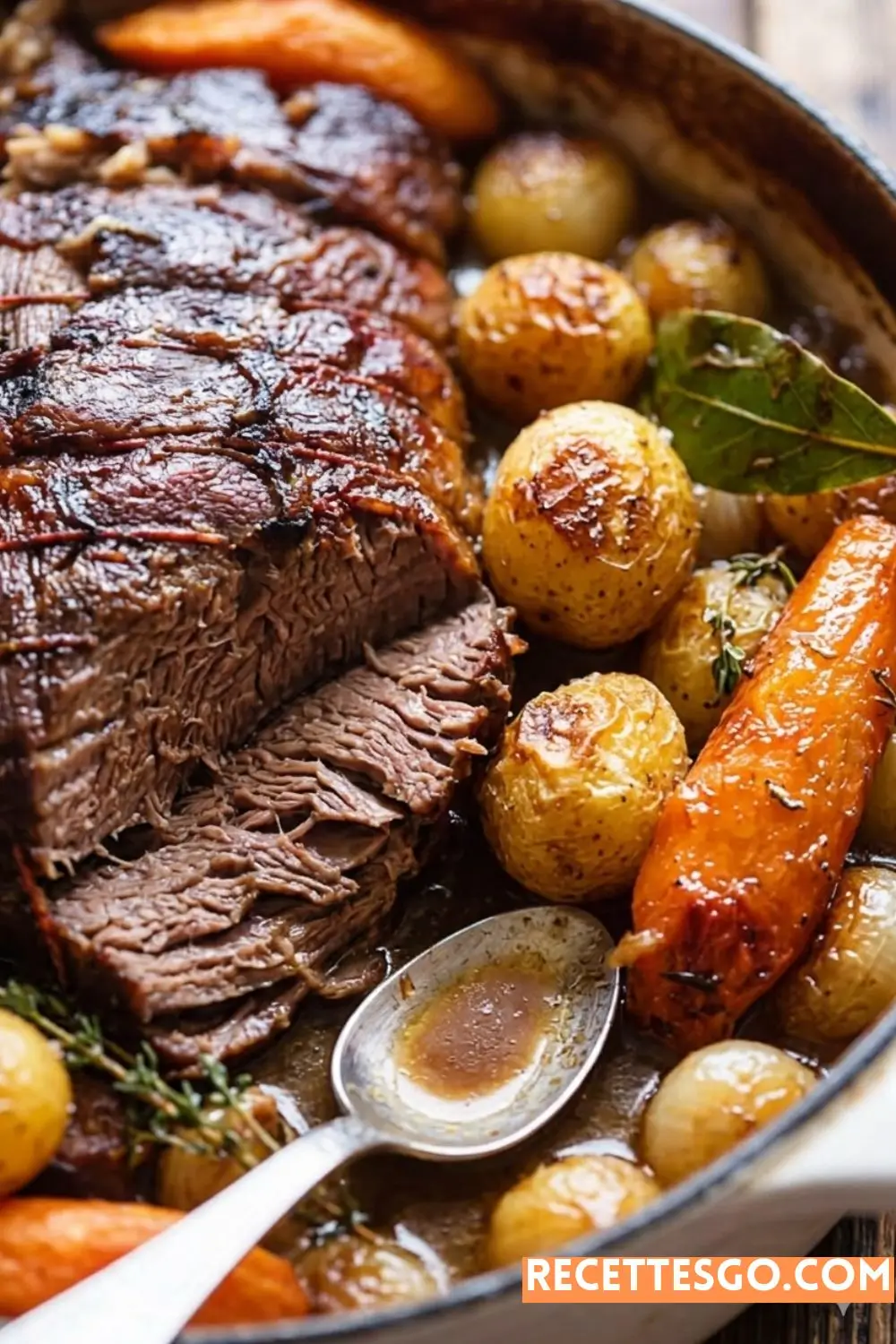
There are recipes you cook on a Tuesday because you’re hungry and out of ideas. And then there are recipes you cook on a Sunday because you actually want to. This is firmly the second kind. A beef pot roast that braises low and slow in a full can of Guinness, filling your kitchen with a dark, malty warmth that smells — and I say this with full confidence — like the inside of the cosiest pub in Britain. The kind of pub with stone floors, a fireplace that’s been burning since 1987, and a chalkboard menu that only ever has three things on it, all of them involving beef.
This is that kind of cooking. Slow, unhurried, and quietly spectacular.
Why This Beef Pot Roast Works So Well
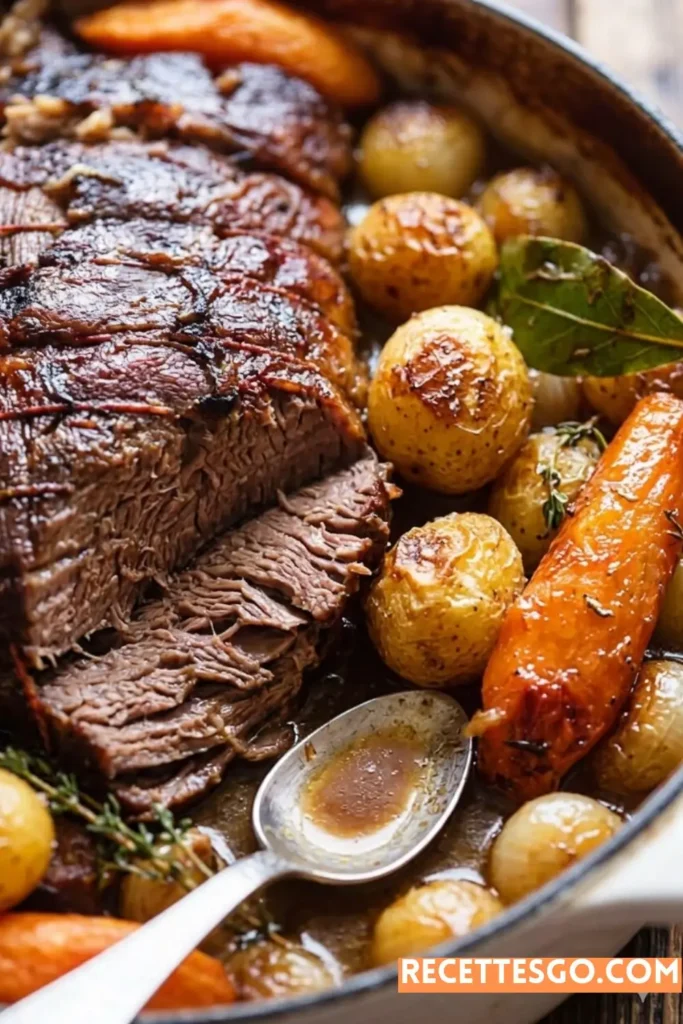
The genius of a beef pot roast is not in the technique — there isn’t much of one. It’s in the patience, and what patience produces: a joint of beef so tender it yields to a fork with barely any resistance, sitting in a gravy so dark and syrupy it could almost pass as something you’d drizzle over dessert. Almost.
What makes this particular pot roast special is the Guinness. Not because it’s clever or unusual to cook with stout — it isn’t — but because it contributes something you simply can’t replicate with more beef stock alone. There’s a roasted bitterness, a coffee-dark depth, a maltiness that transforms what could have been a decent weeknight braise into something that feels considered. Deliberate. Like you planned this. (You did plan this. Well done.)
The other thing this recipe does exceptionally well is the all-in-one approach. Beef, carrots, baby potatoes — everything cooks together in a single cast iron pot. There’s one pot to wash up. This is not a small thing.
The Ingredients, and What to Know About Them
The beef. Brisket or chuck roast — that’s your choice, and both are good ones. Chuck sits over the shoulder, well-marbled, and takes beautifully to a slow cook. Brisket, from around the chest, is typically cheaper and marginally tougher, but three hours at a low temperature will see it right. If your brisket comes as a flat, unrolled cut (common in North America), roll it into a cylinder and tie it with kitchen string. This is not optional if you want even cooking and edges that haven’t gone dry and sad by the time everything else is done.
One note on fat: trim it if there’s a thick layer. A little marbling is the whole point — it renders into the gravy and keeps the meat moist. A thick cap of fat sitting on top of your gravy at the end is not the goal.
The Guinness. One full can. Don’t hold any back for yourself, it all goes in. If you don’t cook with alcohol, the 0% version is a genuine, non-compromising substitute — the gravy won’t know the difference. Other stouts and dark porters work equally well. What you’re after is that roasted, slightly bitter backbone, and any good dark beer will get you there.
The vegetables. Two carrots, a couple of parsnips if you fancy them, and baby potatoes — whole, unpeeled, waxy enough to hold their shape through an hour in the oven. Don’t swap them for floury potatoes that will disintegrate into the gravy. The baby potatoes do more than provide substance; they soak up the Guinness-laced stock from the bottom of the pot and taste absolutely extraordinary as a result.
Bay leaves and thyme. They go in quietly and do important, unsung work. The bay leaves lend a subtle earthiness to the stock; the thyme sprigs perfume the whole pot from the moment they hit the softened onions.
How to Make It: A Walkthrough
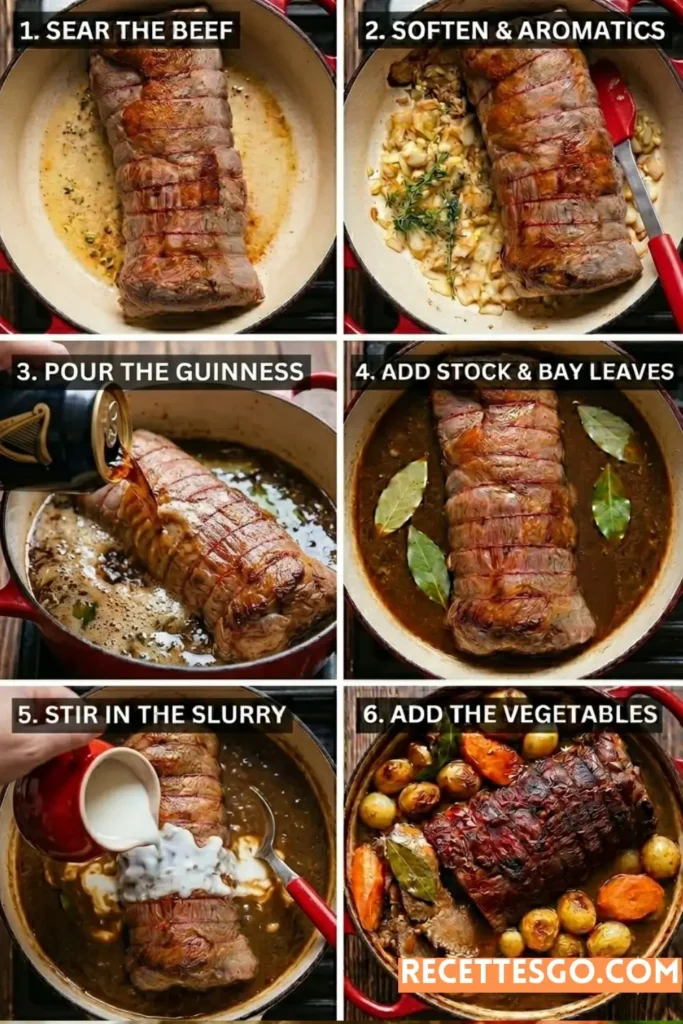
Start with a proper sear. Season the beef generously with salt and pepper, heat a tablespoon of vegetable oil in your largest cast iron pot until it shimmers, and brown the joint on all sides until genuinely golden. Don’t rush this step; the colour you build here goes directly into the flavour of the finished gravy. Remove the beef to a plate and don’t wash the pot — those caramelised drippings stuck to the bottom are the foundation of everything that follows.
Into the same pot, add the chopped onion and cook gently for a good five minutes until soft and translucent. Then the minced garlic and thyme sprigs — another thirty seconds, no more, because burnt garlic is one of those irreversible kitchen catastrophes and not the story we’re telling today.
Pour in the Guinness. It will hiss and bubble dramatically. Let it. Add the beef stock, tuck in the bay leaves, lower the beef back into the pot, and put the lid on. Into the oven it goes at 150°C/300°F, where it will sit, perfectly unbothered, for two hours. Flip the joint after one hour so both sides get equal time submerged in the liquid.
At the two-hour mark, pull the pot out and stir in a cornstarch slurry — cornstarch mixed with twice the amount of water — which will thicken the gravy from a thin braising liquid into something with real body. Now arrange the carrots, parsnips, and baby potatoes all around the beef, and return the whole pot to the oven, this time without the lid. One final hour, uncovered, while the sauce reduces and the vegetables cook through and the whole thing takes on a slightly sticky, glazed quality that will make you want to eat straight from the pot with a spoon.
Test the beef by pulling at the edges with a fork. There should be very little resistance — it should almost come away in thick, reluctant flakes. Rest for ten minutes before slicing, because resting is not optional and anyone who says otherwise is wrong.
A Few Serving Thoughts
This is a complete dinner on its own terms — beef, starch, vegetables, gravy. There is nothing missing. If, however, you are the sort of person who feels incomplete without something green on the table (I am that person), buttered green beans or roasted cabbage wedges would fit beautifully alongside without competing with the gravy.
Leftovers, should you have them, keep well in the fridge for two to three days. Slices of Guinness-braised beef in a sandwich the following day is not a consolation prize. It is very much the reward.
The Part Where I Tell You It’s Worth the Wait
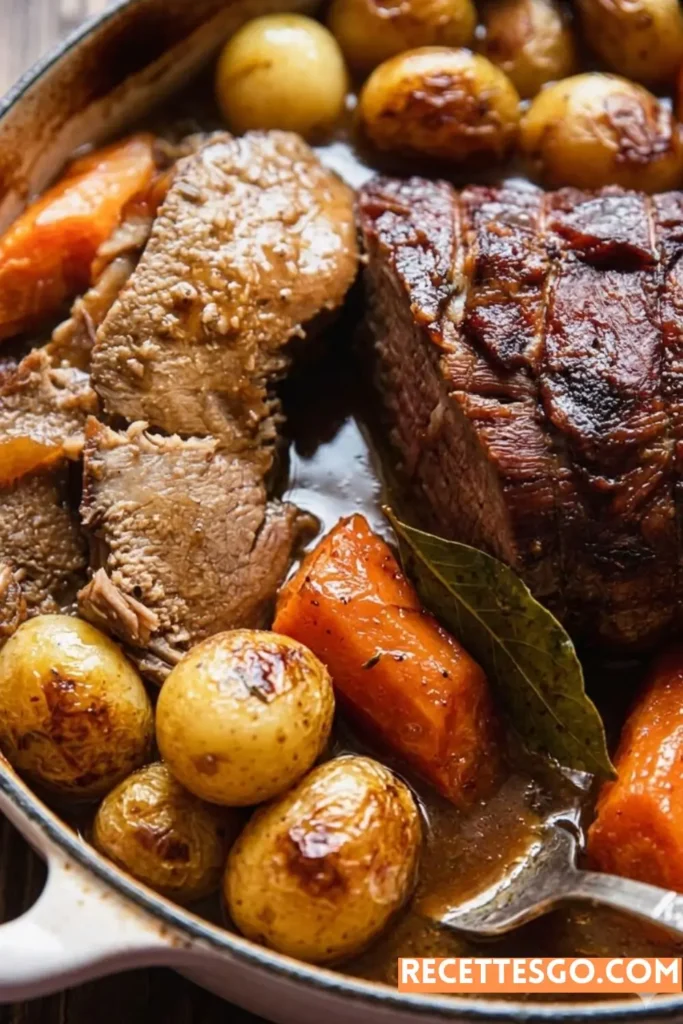
Three hours in the oven sounds like a commitment. It is, technically. But it’s a passive commitment — the kind that asks almost nothing of you after the first fifteen minutes of prep. You could watch something. Read something. Do the laundry you’ve been ignoring since Wednesday. Walk the dog. Have a bath.
And at the end of all that — whatever you chose to do with those three hours — there is a beef pot roast in Guinness gravy waiting for you. Dark, tender, filling every corner of your kitchen with something that smells like a promise kept. That is, genuinely, a very good Sunday.
You May Also Love
- Perfect Filet Mignon
- Chicken Chasseur
- Air Fryer Roast Potatoes
- Chocolate Sticky Toffee Pudding
- Crock Pot Baked Ziti
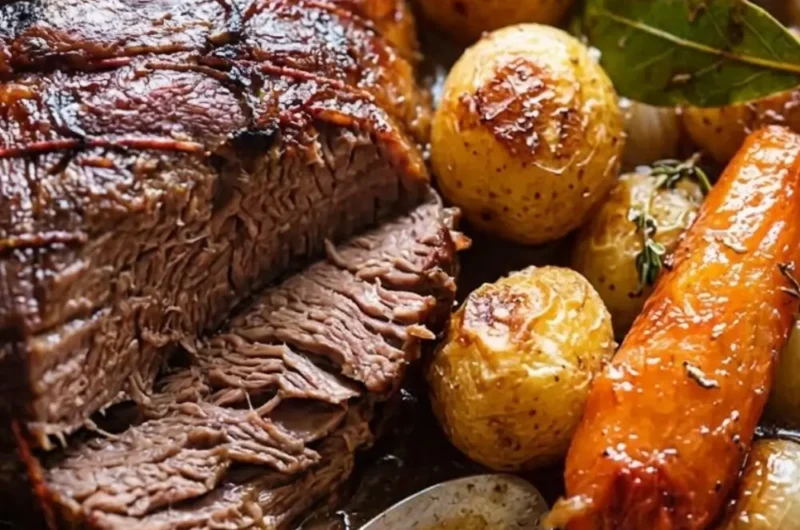
Beef Pot Roast in Guinness Gravy
6
servings15
minutes3
hours678
kcalTender beef braised low and slow in a rich, dark stout gravy — served alongside sweet carrots and buttery baby potatoes, all from a single pot.
Ingredients
- For the roast:
2 kg / 4–4½ lbs beef brisket (rolled) or chuck roast
Salt and pepper, to season
1 tbsp vegetable oil
1 onion, roughly chopped
2 garlic cloves, minced
3–4 fresh thyme sprigs
440ml / 1 can Guinness or other stout
500ml / 2 cups beef stock
1–2 bay leaves
1 tbsp cornstarch mixed with 2 tbsp cold water
- For the vegetables:
2 carrots, cut into large chunks
2 parsnips, cut into large chunks (optional)
500g / 1 lb baby potatoes, whole and unpeeled
Directions
- Set your oven to 150°C / 300°F. Season the beef generously with salt and pepper. Warm the oil in a large cast iron pot over high heat and sear the beef on all sides until deep golden. Transfer to a plate and set aside.
- Reduce to medium-low heat. Add the onion to the same pot and cook gently for 5 minutes until softened. Stir in the garlic and thyme sprigs and cook for another 30 seconds — don’t let the garlic colour.
- Pour in the Guinness and beef stock and bring to a gentle simmer. Tuck in the bay leaves, nestle the beef back into the pot, and place the lid on. Transfer to the oven and cook for 2 hours, turning the beef over at the halfway mark.
- Pull the pot from the oven and stir the cornstarch slurry into the braising liquid. Arrange the carrots, parsnips, and baby potatoes around the beef. Return to the oven, this time without the lid, for a final hour — or until the beef is tender and the vegetables are cooked through. To check doneness, gently tug at the edges of the beef with a fork; it should give with very little resistance.
- Lift the beef out and let it rest on a board for 10 minutes. Remove the kitchen string, slice thickly, and serve with the vegetables and plenty of gravy spooned over the top.
Notes
- No alcohol? The 0% Guinness works just as well here — the gravy won’t suffer at all.
- Stout alternatives: Any dark stout or porter will do the job beautifully in place of Guinness.
- Brisket comes flat? Roll it into a cylinder and tie it with kitchen string before cooking so it holds its shape and cooks evenly.
- Fat trimming: If your joint has a thick fat cap, trim most of it off. A little is great for flavour; too much will leave an oily layer sitting on your gravy.
- Why baby potatoes? Their waxy texture means they hold their shape through the long cook — floury varieties will fall apart.