Okay, real talk. I grew up eating those little square packets of instant ramen out of a styrofoam cup with the plastic peeled back halfway. You know the ones. And for years, I thought that was just… the ramen experience. Boiling water, dusty powder packet, done.
Then someone showed me what you could actually do with those same noodles — and honestly? My life changed a little. Okay, a lot. This chicken ramen recipe is the reason I now keep instant noodles stocked like a pantry essential rather than a college dorm backup plan.
Why This Chicken Ramen Recipe Is the One You’ve Been Looking For
Here’s the thing about homemade chicken ramen recipes — they don’t have to be complicated. You don’t need to simmer a broth for eight hours or track down some specialty ingredient that lives three towns away. This version hits that beautiful sweet spot: it feels special enough for a Friday night, but it’s doable on a random Tuesday when you just… cannot deal with a complicated dinner.
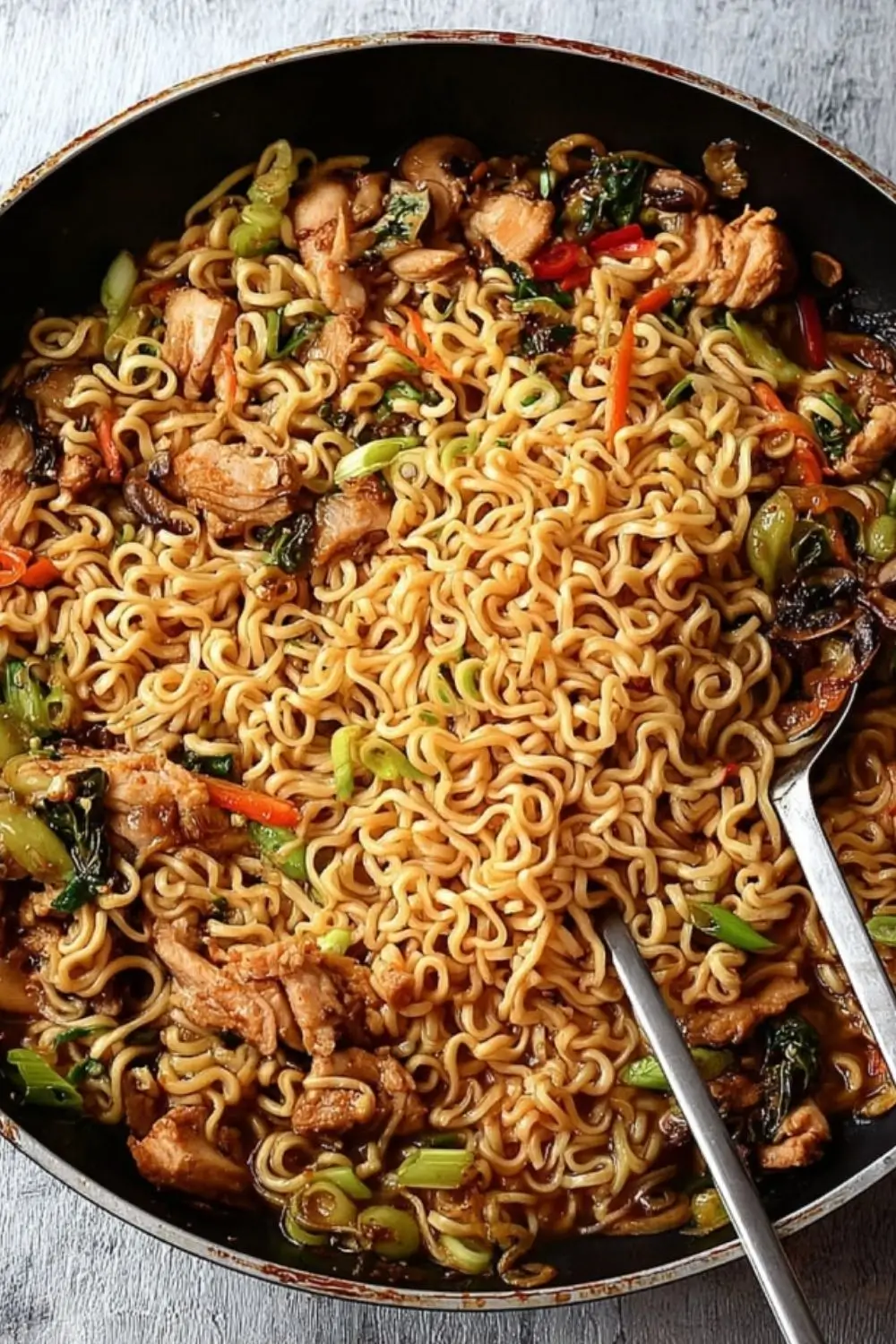
What makes this one stand out is the sauce. Oh, the sauce. It’s this punchy, sticky, slightly sweet situation made with soy sauce, hoisin, sesame oil, rice vinegar, sriracha, and a little brown sugar. It coats every single noodle and every piece of chicken and honestly — you will be tempted to just eat it with a spoon before it even hits the pan. Don’t. (Well, maybe just a little taste.)
And the best part? The whole thing clocks in at just over $13 for a meal that serves four people. That’s less than one fast-casual bowl. I’ll do the math on that one for you — it’s less than $3.50 per serving. Genuinely hard to beat.
Let’s Talk About Those Instant Ramen Noodles
Yes, we’re using instant ramen noodles here — three packets of them, to be exact. But here’s the crucial part: throw away (or save for another use, honestly) those little seasoning packets. We’re making our own sauce, and it is infinitely better than the sodium bomb hiding in that foil envelope.
The trick with the noodles is to undercook them just slightly — pull them out about a minute before the package says to, then rinse them in cold water to stop the cooking. Toss them in a little olive oil so they don’t clump into one sad noodle brick, and set them aside. They’ll finish cooking when they hit the hot pan with all that saucy goodness later.
Pro tipIf you’ve ever wondered why your homemade ramen noodles turn into mush, it’s because they kept cooking in residual heat. The cold rinse + oil method fixes this entirely. Game changer.
Can you use different noodles?
Absolutely. Rice noodles, udon, soba, lo mein — all of them work beautifully here. The instant ramen just happens to be the most budget-friendly and fastest option, which is part of why this recipe is so ridiculously accessible. But if you have something else in your pantry, go for it. This sauce is not picky.
The Chicken: Thighs vs. Breasts (An Honest Opinion)
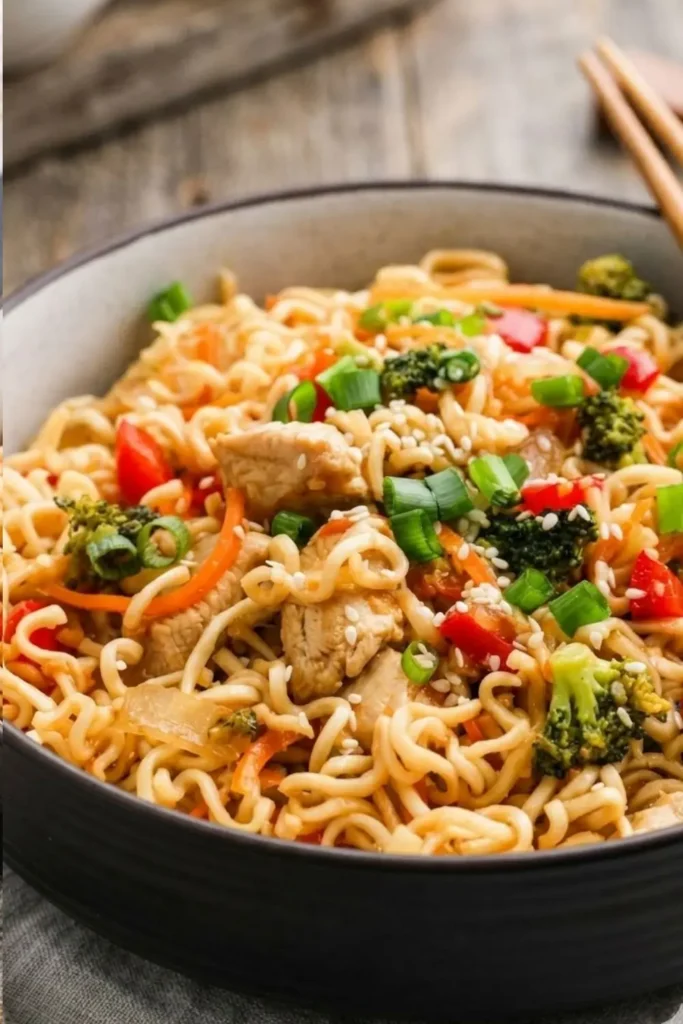
The recipe works with either chicken breasts or thighs, and I genuinely use both depending on what’s in my fridge. But if you’re asking me for a personal preference? Thighs. Every time. They stay juicier when you’re cooking them in a hot skillet, they’ve got a little more flavor, and they’re usually cheaper too. Win-win-win.
That said, chicken breasts are totally fine here — just make sure you’re cutting them into small, bite-sized pieces so they cook quickly and evenly. You’re sautéing them over medium-high heat, so smaller pieces mean they brown nicely on the outside without drying out in the middle. And please — use a meat thermometer if you have one. Internal temperature of 165°F is your target, and it takes all the guesswork out of it.
Getting that good sear
Don’t overcrowd the pan. This is one of those cooking rules that sounds fussy but genuinely makes a difference. If you pile all the chicken in at once, it steams instead of searing and you lose that gorgeous golden-brown crust. Cook it in batches if you need to. That little bit of extra effort pays off in flavor.
The Vegetables: Colorful, Crispy, and Totally Customizable
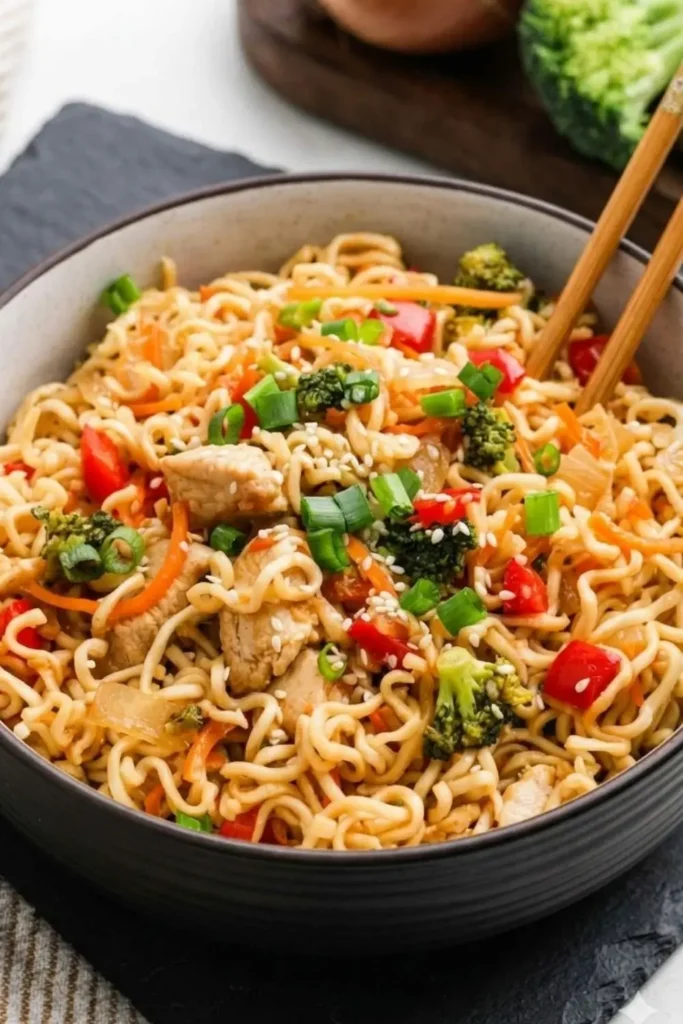
This chicken ramen recipe calls for red bell pepper, broccoli, shredded carrots, and onion — and that combination is genuinely great. You’ve got color, crunch, and a nice variety of textures. But here’s the thing: this recipe is basically a template. Got a zucchini sitting on your counter looking sad? Throw it in. Snap peas? Great. Baby corn? Absolutely yes. Mushrooms? Oh, that would be incredible.
The vegetables only need about 4–5 minutes in the pan, and you actually want them to stay a little crisp. Nobody wants mushy, overcooked vegetables in their ramen. The goal is tender-but-still-has-a-bite, which is a texture that sounds complicated but is really just “don’t walk away from the stove and check your phone.”
And then comes the garlic and ginger — minced garlic and freshly grated ginger go in right at the end of the vegetable cook time, just about 60 seconds. That minute is everything. The kitchen smells absolutely incredible, and those two ingredients bring the whole dish into sharper, more complex flavor territory. Fresh ginger especially — please don’t skip it or swap it for powder. The difference is noticeable.
That Sauce, Though — Let’s Break It Down
The sauce is what elevates this from “dinner I made with instant noodles” to “wait, did you order this?” territory. It’s a mix of soy sauce for that deep savory backbone, sesame oil for nuttiness, hoisin for a thick richness, rice vinegar to cut through and brighten everything, sriracha for heat, and brown sugar to balance it all out.
You can whisk it together in about two minutes and it keeps well in the fridge if you want to make a double batch for later in the week. Drizzled over rice, used as a stir-fry sauce, tossed with roasted vegetables — it’s versatile in the best way. Just saying.
Adjusting the heat levelThe tablespoon of sriracha gives a noticeable but not overwhelming kick. If you’re cooking for people who don’t love spice, start with half. If you’re cooking for people who put hot sauce on everything, feel free to add more. The sauce is forgiving and easy to adjust to taste.
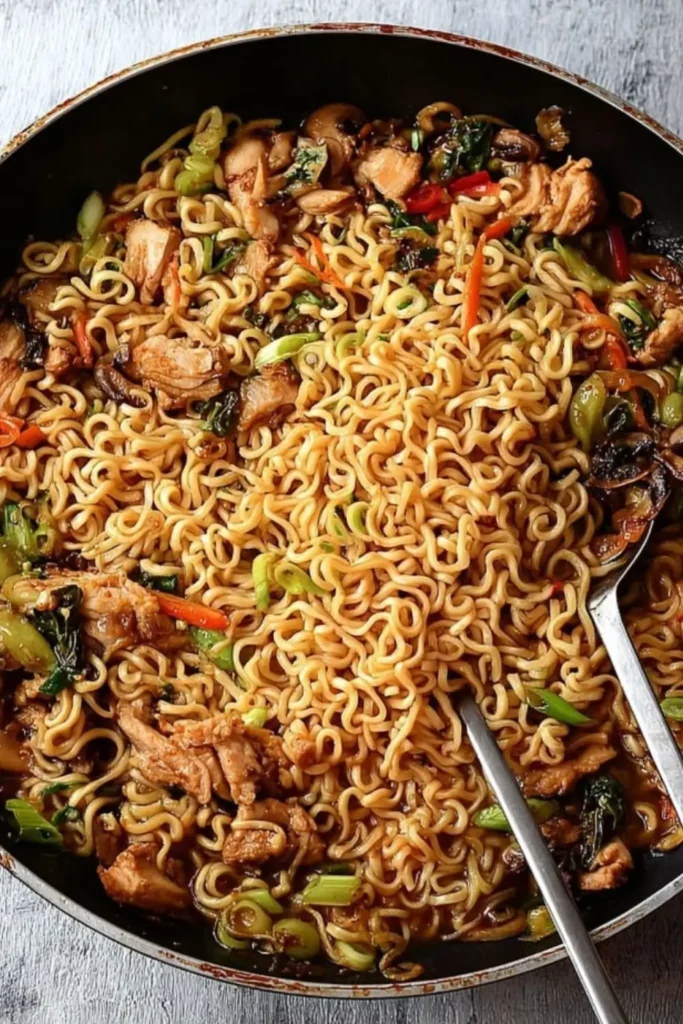
Storing Leftovers (And a Word of Warning)
Leftover chicken ramen noodles can be stored in an airtight container in the refrigerator for up to three days. But — and this is a real but — the noodles do get softer as they sit. Instant ramen noodles are small and they absorb liquid over time, so by day two, the texture is noticeably different from fresh.
It still tastes good! Don’t get me wrong. But if you’re the kind of person who cares deeply about noodle texture (valid, very valid), this is a recipe best eaten fresh. If you’re meal prepping, you could cook the chicken and vegetables ahead of time and keep them separate from the noodles, then combine everything when you’re ready to eat. That’s the best workaround I’ve found.
Finishing Touches That Actually Matter
Sesame seeds and diced green onions are listed as optional toppings in this recipe, but I’d strongly encourage you not to skip them. They’re inexpensive, they take zero effort, and they add that little visual finish that makes the dish look like you actually tried — even if you made it in 35 minutes on a weeknight.
The green onions especially add a fresh, sharp contrast to all the rich, savory sauce flavors. A little crunch, a little brightness. It’s the kind of thing that seems small but you’d notice if it was missing.
Frequently Asked Questions
Can I make chicken ramen without chicken broth?
Yes! This particular recipe skips traditional ramen noodles chicken broth entirely and relies on the sauce for all its flavor. So if you’re expecting a soup-style ramen, this is more of a stir-fry ramen — think saucy, not soupy. It’s a different vibe but arguably even more weeknight-friendly since there’s no broth to prepare.
Is this recipe good for kids?
It is, with a small tweak — just reduce or leave out the sriracha. The rest of the sauce is mild enough that most kids enjoy it, especially if they’re already fans of noodles and stir-fry-style dishes. The shredded carrots also have a way of disappearing into the noodles, which is useful if you have a vegetable skeptic at the table.
Can I make this vegetarian?
Totally. Swap the chicken for firm tofu, tempeh, or even chickpeas, and make sure your hoisin sauce is vegan-friendly (most are). The sauce and the vegetable combination work beautifully without the meat.
The Bottom Line
This chicken ramen recipe is genuinely one of those dishes that earns a permanent spot in your dinner rotation. It’s fast, it’s affordable, it tastes way more impressive than the ingredients would suggest, and it comes together in one pan (plus the pot for the noodles, but that barely counts). It’s the kind of meal you make once and then find yourself thinking about the following week.
So go ahead — reclaim the instant ramen packet from its college dorm reputation. It was always capable of something this good. It was just waiting for the right sauce.
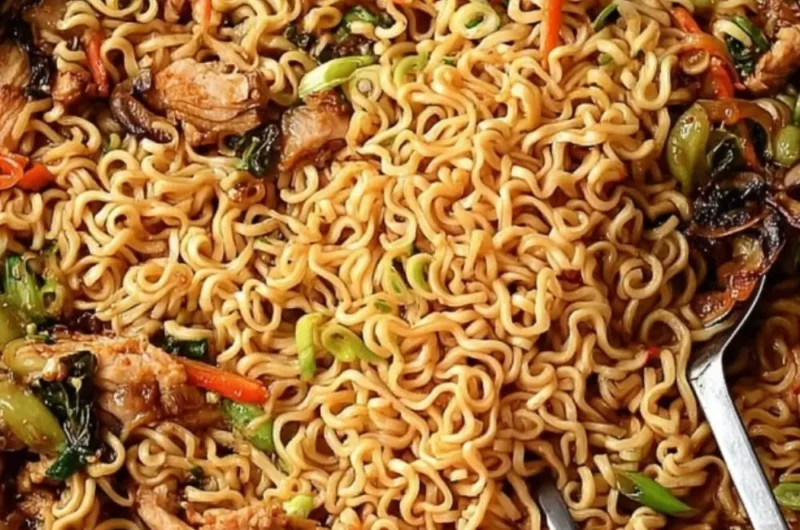
Chicken Ramen Recipe
4
servings15
minutes15
minutes630
kcalThis Chicken Ramen recipe is packed with flavor using simple ingredients like ramen noodles chicken broth, tender chicken, and fresh veggies.
Ingredients
3 packs instant ramen noodles (about 3 oz each, seasoning packets removed)
2 tablespoons olive oil, divided
2 pounds chicken breasts or thighs, cut into small bite-sized pieces
½ teaspoon salt
½ teaspoon black pepper
½ onion, chopped
1 red bell pepper, diced
1 cup broccoli, chopped into small pieces
1 cup shredded carrots
2 garlic cloves, finely minced (or 2 teaspoons pre-minced garlic)
1-inch piece fresh ginger, grated
Sesame seeds (optional, for garnish)
Chopped green onions (optional, for garnish)
- Sauce:
¼ cup soy sauce
2 teaspoons sesame oil
2 tablespoons hoisin sauce
1 tablespoon rice vinegar
1 tablespoon sriracha sauce
2 tablespoons brown sugar
Directions
- Cook and prep the noodles. Bring a large pot of water to a boil. Cook the ramen noodles, but pull them out one full minute before the package says they’re done — they’ll finish cooking in the pan later. Drain immediately and flush with cold running water to halt any residual cooking. Transfer to a bowl and stir through 1 tablespoon of the olive oil to keep the strands loose. Set aside.
- Mix the sauce. Combine the soy sauce, sesame oil, hoisin, rice vinegar, sriracha, and brown sugar in a small bowl. Whisk until the sugar dissolves and everything is fully blended. Set it nearby — you’ll need it quickly once things heat up.
- Sear the chicken. Pour the remaining tablespoon of olive oil into a wide skillet or wok and heat over medium-high. Add the diced chicken in a single layer, sprinkle with salt and pepper, and let it cook undisturbed for 2–3 minutes per side until nicely browned on the outside. Transfer the chicken to a clean plate and set aside — it will finish cooking later when everything comes back together.
- Cook the vegetables. Using the same pan (don’t clean it — those browned bits are flavor), add the chopped onion, bell pepper, broccoli, and shredded carrots. Stir-fry for 4 to 5 minutes over medium-high heat, keeping things moving so the vegetables soften slightly but hold their texture and crunch. Add the minced garlic and grated ginger, stir everything together, and cook for another 60 seconds until the aromatics bloom and the kitchen starts smelling incredible.
- Bring the chicken back. Return the seared chicken to the pan with the vegetables. Stir and continue cooking until the chicken is fully cooked through, reaching an internal temperature of 165°F. An instant-read thermometer is the easiest and most reliable way to check this.
- Add the sauce. Pour the prepared sauce over the chicken and vegetable mixture. Toss everything together well so every piece gets thoroughly coated in that glossy, sticky sauce.
- Finish with the noodles. Add the reserved noodles to the pan and use tongs to toss the whole thing together until the noodles are evenly coated in sauce and the chicken and vegetables are distributed throughout. Everything should look glossy and well combined.
- Plate and garnish. Divide into bowls and finish with a sprinkle of sesame seeds and sliced green onions if using. Serve immediately.
Notes
- An instant-read meat thermometer takes the guesswork out of knowing when the chicken is done. 165°F internal temperature is your target every time.
- The vegetable lineup is totally flexible. Swap in whatever you have — snap peas, mushrooms, zucchini, baby corn, or bok choy all work well. You can also skip the vegetables entirely if you prefer.
- Store any leftovers sealed in an airtight container in the refrigerator for up to 3 days. That said, this dish is at its best fresh — instant ramen noodles are small and tend to absorb the sauce and soften considerably overnight, so texture will change the longer it sits.