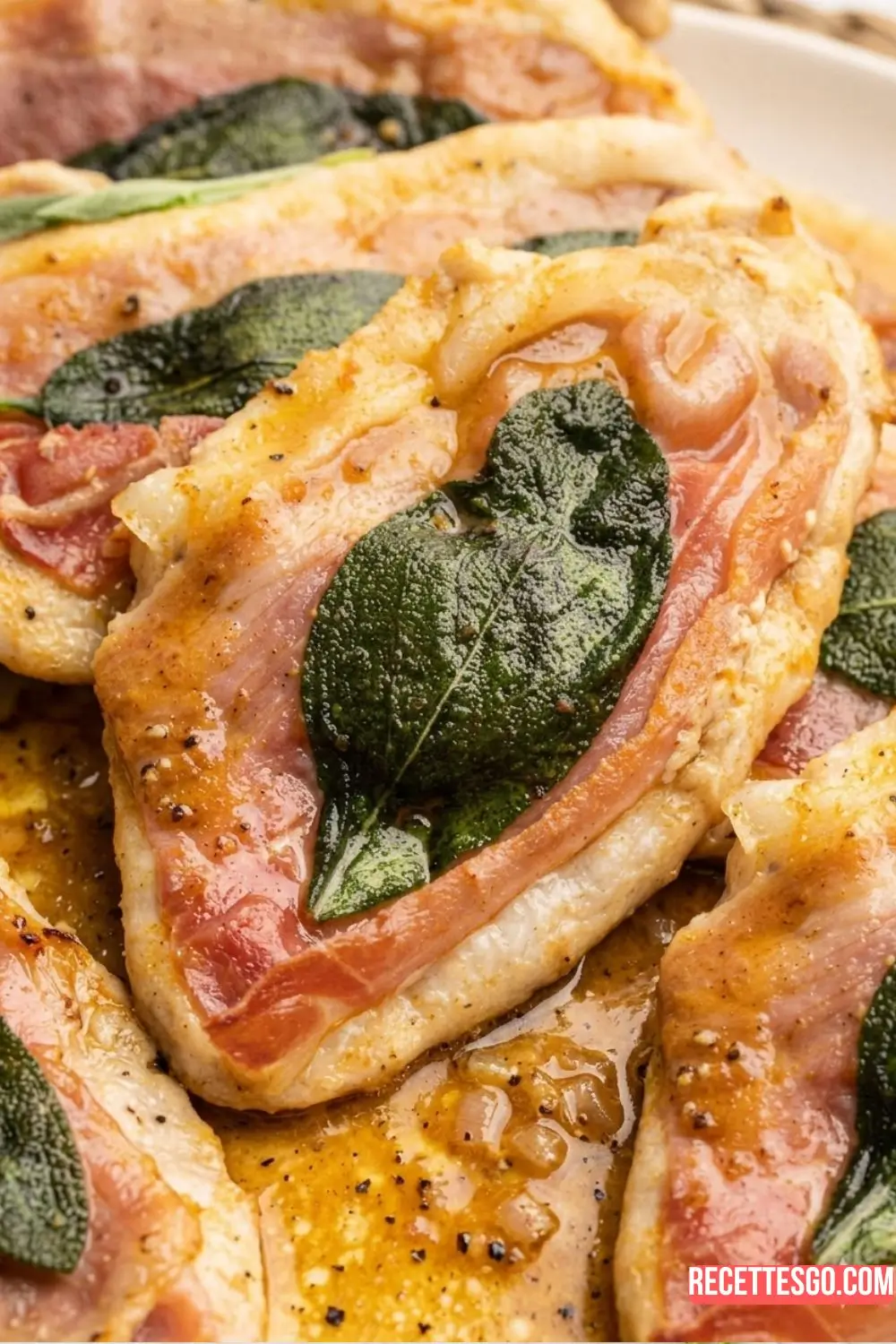
If there’s one dish that makes me feel like I actually have my life together in the kitchen, it’s this chicken saltimbocca recipe. Fancy-sounding name, deceptively simple process, and a pan sauce that will genuinely make you want to lick the skillet. Yes, the skillet. No shame here.
I first made this on a random Tuesday night when I was trying to impress… myself, honestly. I had some prosciutto in the fridge that needed using, fresh sage from my little windowsill pot, and a couple of chicken breasts staring back at me. Twenty-five minutes later? Restaurant-quality dinner. I stood at the counter eating it straight from the pan. Absolutely worth it.
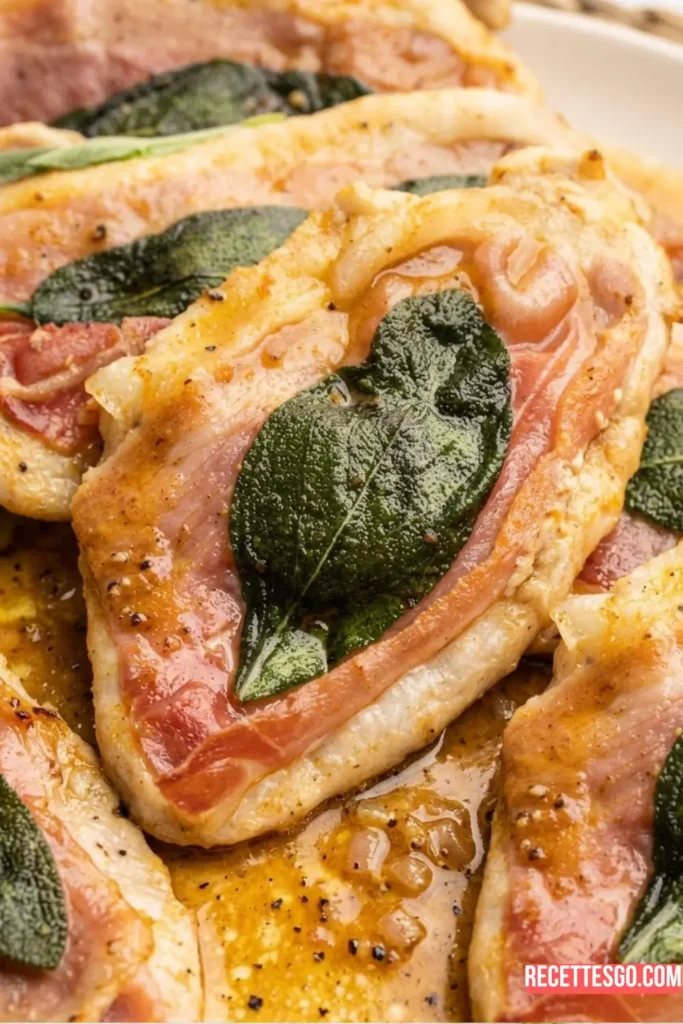
So, What Is Chicken Saltimbocca, Exactly?
Great question. What is chicken saltimbocca — and why does that name sound like something you’d order at a trattoria in Rome with a glass of Pinot Grigio in hand? Well, because you absolutely could.
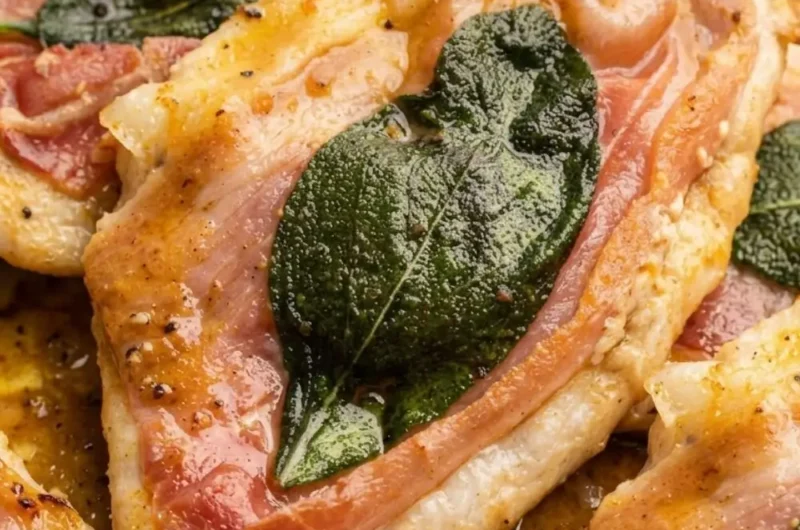
“Saltimbocca” is Italian and it literally translates to “jump in the mouth” — which is wildly accurate once you taste it. The classic Roman version uses veal, but saltimbocca chicken is the weeknight-friendly swap that doesn’t sacrifice any of that savory, herby, buttery magic. Each piece of chicken is layered with silky prosciutto and a fresh sage leaf, then quickly pan-fried and finished with a white wine butter sauce that ties the whole thing together.
It’s the kind of dish that sounds way more complicated than it is. Which is exactly what we love around here.
Why You’ll Fall Hard for This Dish
Let me count the ways:
- It’s fast. We’re talking under 30 minutes, start to finish.
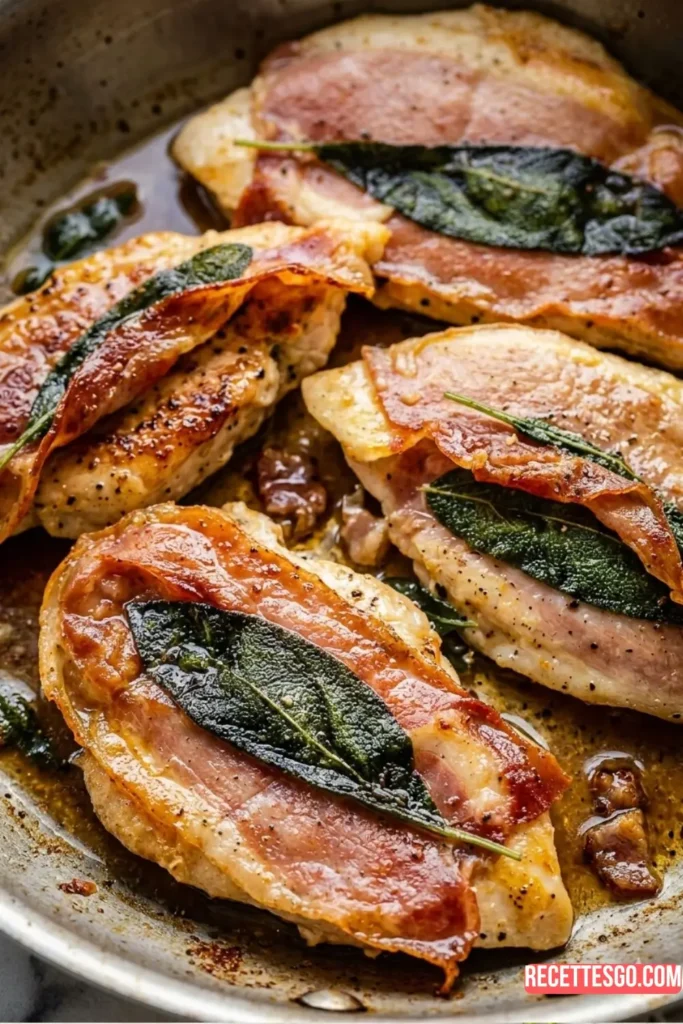
- It looks stunning on a plate. The golden-brown chicken with the crisped prosciutto edges? Chef’s kiss.
- That sauce. Oh, that sauce. Reduced white wine with swirls of butter and all the caramelized bits from the bottom of the pan — it’s deeply savory and just a little bit indulgent.
- It’s naturally low-carb and gluten-reducible (just use a light dusting of flour or skip it entirely for a GF version).
Honestly, this is the dinner party showstopper that requires almost zero effort. Your guests don’t need to know that.
Ingredients You’ll Need
Nothing exotic here — just a handful of quality ingredients that do serious heavy lifting.
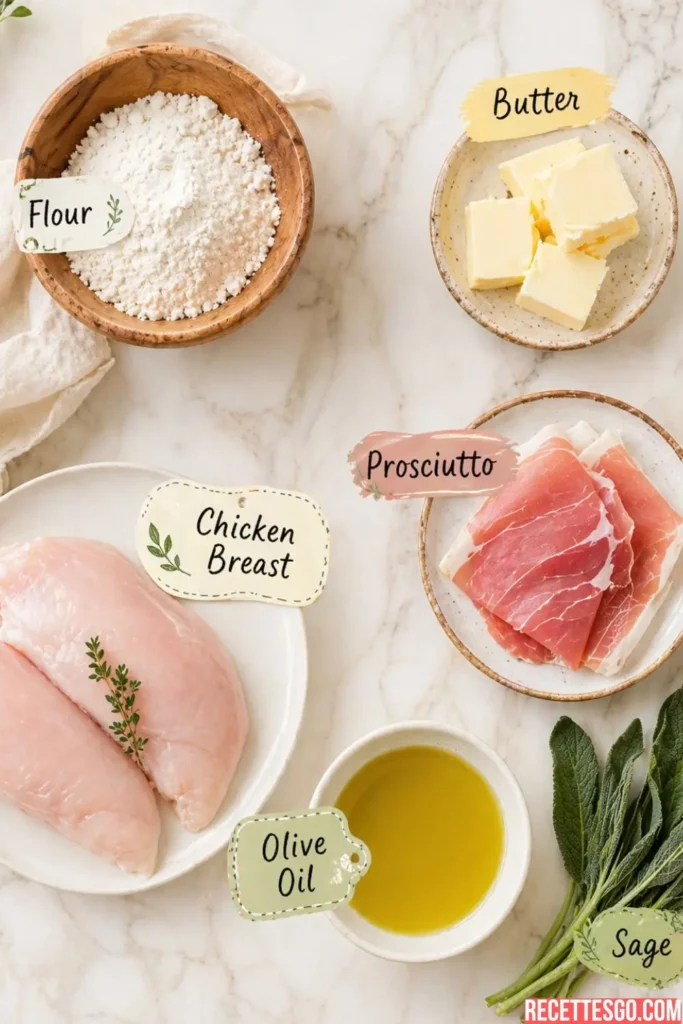
- Chicken breasts — Boneless and skinless. We’re slicing and pounding these into thin, even cutlets, so size doesn’t matter much.
- Prosciutto — Thinly sliced is key. It crisps up beautifully and brings all the saltiness the dish needs. Don’t go for thick-cut here; it won’t render properly.
- Fresh sage leaves — Not dried. Fresh sage has this earthy, slightly peppery quality that dried just can’t replicate. It pairs with the prosciutto in a way that borders on magical.
- All-purpose flour — Just a light dusting. This helps the chicken get that gorgeous golden crust without weighing down the sauce.
- Olive oil + salted butter — The dream team. Oil to cook, butter to finish. Two tablespoons go into the sauce at the end and they transform it entirely.
- White wine — Dry is best. It deglazes the pan and picks up all those gorgeous browned bits. Use something you’d actually drink.
- Salt and black pepper — Go easy on the salt upfront. Prosciutto is already quite salty, and you can always adjust at the end.
How to Make Chicken Saltimbocca Step by Step
Step 1: Prep the Chicken
Lay each chicken breast flat on your cutting board and slice it horizontally through the middle to create two even pieces. Then, put those pieces between two layers of plastic wrap and give them a gentle pound with a meat mallet or rolling pin. Work from the center outward. You’re going for even thickness — not paper-thin, just uniform. This step is genuinely worth the extra two minutes because it ensures everything cooks at the same rate.
Step 2: Season and Assemble
Give each cutlet a tiny pinch of salt and a good crack of black pepper. Remember — prosciutto. It’s already salty. Then lay a slice of prosciutto on top of each piece, followed by a single sage leaf. Secure everything with a toothpick so it doesn’t slide around in the pan.
Now flip the cutlets over and lightly dust the non-prosciutto side with flour. Tap off any excess. You want a fine, barely-there coating — not a thick dredge. Less is genuinely more here.
Step 3: Cook the Chicken
Heat olive oil and about a third of the butter in a skillet over medium heat. When the butter is foamy and the pan is hot, add the chicken prosciutto-side up. This is important — prosciutto burns fast, and you want it to color gently, not char. Let it cook for 1-2 minutes until the underside is golden, then flip and cook for just 20-30 seconds on the prosciutto side. That’s it. Remove and repeat with any remaining pieces.
Don’t overcrowd the pan. If you pack too many cutlets in at once, they’ll steam instead of sear, and you’ll miss out on all that beautiful color and flavor. Cook in batches and don’t rush it.
Step 4: Make the Pan Sauce
This is the part where everything gets really good. Once all the chicken is cooked and resting, pour the white wine into the hot pan and use a wooden spoon to scrape up all the browned bits from the bottom. Those bits are pure flavor — don’t leave them behind.
Let the wine simmer until it’s reduced by about half. Then reduce the heat to low and add the remaining two tablespoons of butter. Swirl the pan gently until the butter melts and emulsifies into a glossy, slightly thick sauce. Season with extra black pepper. A little goes a long way here.
Step 5: Bring It All Together
Nestle the chicken back into the pan. Spoon that gorgeous sauce over each piece and let everything warm through for about a minute. Serve immediately — this dish waits for no one.
Tips for Getting It Just Right
Don’t skip the pounding step. Even thickness is everything. Uneven cutlets mean some parts dry out while others are still cooking through.
Flour lightly. A sheer dusting is all you want. Too much flour will make the sauce gluey and heavy, and it can dull those bright, delicate flavors you’re working with.
Taste before you salt. Seriously. The prosciutto, the butter, and even the wine bring salt to the party. Add more only after you’ve tasted the finished sauce.
Use a wide enough pan. Give each cutlet its own personal space. Crowded chicken = steamed chicken = sad dinner.
What to Serve with Saltimbocca Chicken
The sauce is rich but not heavy, so sides that can soak it up are your best friends:
- Creamy mashed potatoes — obvious, perfect, no notes
- Soft polenta — very Italian, very dreamy
- Roasted baby potatoes — a little crunch, a little rustic charm
- Simple green salad — if you want something lighter to balance it out
- Crusty bread — for scooping up the rest of that sauce from the pan (mandatory, honestly)
Make-Ahead and Storage Tips
This chicken saltimbocca recipe is best enjoyed fresh — the sauce is at its silkiest straight from the pan and the prosciutto is at its crispiest right after cooking. That said, leftovers keep well in an airtight container in the fridge for up to 3 days. Reheat gently in a pan over low heat with a tiny splash of water or broth to loosen the sauce.
I wouldn’t recommend freezing it — the texture of the chicken and sauce doesn’t hold up great after freezing.
Final Thoughts
If you’ve been looking for a recipe that feels special but doesn’t require a culinary degree or a two-hour block of free time, saltimbocca chicken is it. It’s the kind of meal that earns you serious compliments with very minimal effort — and honestly, that’s the sweet spot right there.
Make it on a weeknight and pretend you planned something fancy. Make it for a dinner party and watch people’s faces when they take the first bite. Either way, it’s going to be a regular in your rotation. Guaranteed.
Tried this chicken saltimbocca recipe? Drop a comment below — I love hearing how it went! And if you swapped anything or added your own twist, definitely share. That’s how the best recipe variations are born.
Chicken Saltimbocca Recipe
4
servings15
minutes15
minutes498
kcalIngredients
680 grams boneless skinless chicken breasts (2–3 breasts)
100 grams thinly sliced prosciutto
12 fresh sage leaves
4 tablespoons all-purpose flour
2 tablespoons olive oil
45 grams salted butter, divided (1 tbsp for cooking, 2 tbsp for finishing)
160 milliliters dry white wine
0.5 teaspoons freshly ground black pepper, plus extra to taste
0.5 teaspoons salt
Directions
- Butterfly & slice the chicken: Place each chicken breast flat on a cutting board and hold it steady with your palm. Using a sharp knife, slice horizontally through the middle — starting at the thicker end and cutting toward the thinner edge, keeping the blade parallel to the board. Either open the breast out like a book or separate into individual cutlets, giving you 2–3 even pieces per breast.
- Pound to even thickness: Lay the cutlets between two sheets of plastic wrap. Using a meat mallet or rolling pin, pound gently from the center outward until each piece is a uniform thickness. This ensures fast, even cooking and helps the toppings adhere.
- Season & top the cutlets: Lightly season each cutlet with 0.5 teaspoons salt and 0.5 teaspoons freshly ground black pepper, plus extra to taste — go easy, as the prosciutto is already salty. Lay a slice of 100 grams thinly sliced prosciutto and one 12 fresh sage leaves on top of each piece, then secure with a toothpick.
- Dust with flour: Lightly dredge only the prosciutto-free side of each cutlet in 4 tablespoons all-purpose flour. Tap gently to shake off any excess — you want a fine, even coating, not a heavy crust.
- Sear the chicken: Heat 2 tablespoons olive oil and one-third of the 45 grams salted butter, divided (1 tbsp for cooking, 2 tbsp for finishing) in a large skillet over medium heat. Once the butter has melted and the pan is hot, add the chicken cutlets prosciutto-side up (this prevents the prosciutto from burning). Sear for 1–2m 30s, then carefully flip and cook for just 20–30 seconds on the other side. Transfer to a plate and repeat with any remaining cutlets, adding a little extra oil to the pan if needed.
- Deglaze with white wine: Once all the chicken is set aside, pour 160 milliliters dry white wine into the hot pan. Use a wooden spoon to scrape up all the browned bits from the bottom — this is where the flavor lives.
- Reduce the sauce: Let the wine simmer until it has reduced by half.
- Finish with butter: Lower the heat and swirl in the remaining 45 grams salted butter, divided (1 tbsp for cooking, 2 tbsp for finishing). Keep swirling the pan until the butter fully emulsifies into a glossy, thickened sauce. Season generously with extra freshly ground black pepper.
- Return chicken & serve: Return the chicken to the pan and spoon the sauce liberally over each cutlet. Heat for about 1 minute, then serve immediately.
Notes
- Prosciutto quantity: The amount you need may vary depending on how thinly it has been sliced — adjust accordingly.
- Tips for success:
Go light on the flour. A delicate dusting is all that’s needed. Too much will over-thicken the sauce and weigh the chicken down.
Pound evenly. Uniform thickness means faster cooking, a juicier result, and better adhesion of the prosciutto and sage.
Don’t crowd the pan. Give each cutlet room to sear properly. A packed pan causes steaming, which dulls both the flavor and the color. Cook in batches if needed.
Season with restraint. Prosciutto carries significant saltiness on its own. A small pinch of salt is usually enough — taste as you go.